How to Choose a Native Tree for Your Yard
Take a walk through your yard and let the space tell you which tree belongs there.
Most every yard has a spot waiting for a tree or shrub. Finding it is the easy part. Choosing what goes there is where most of us get stuck.
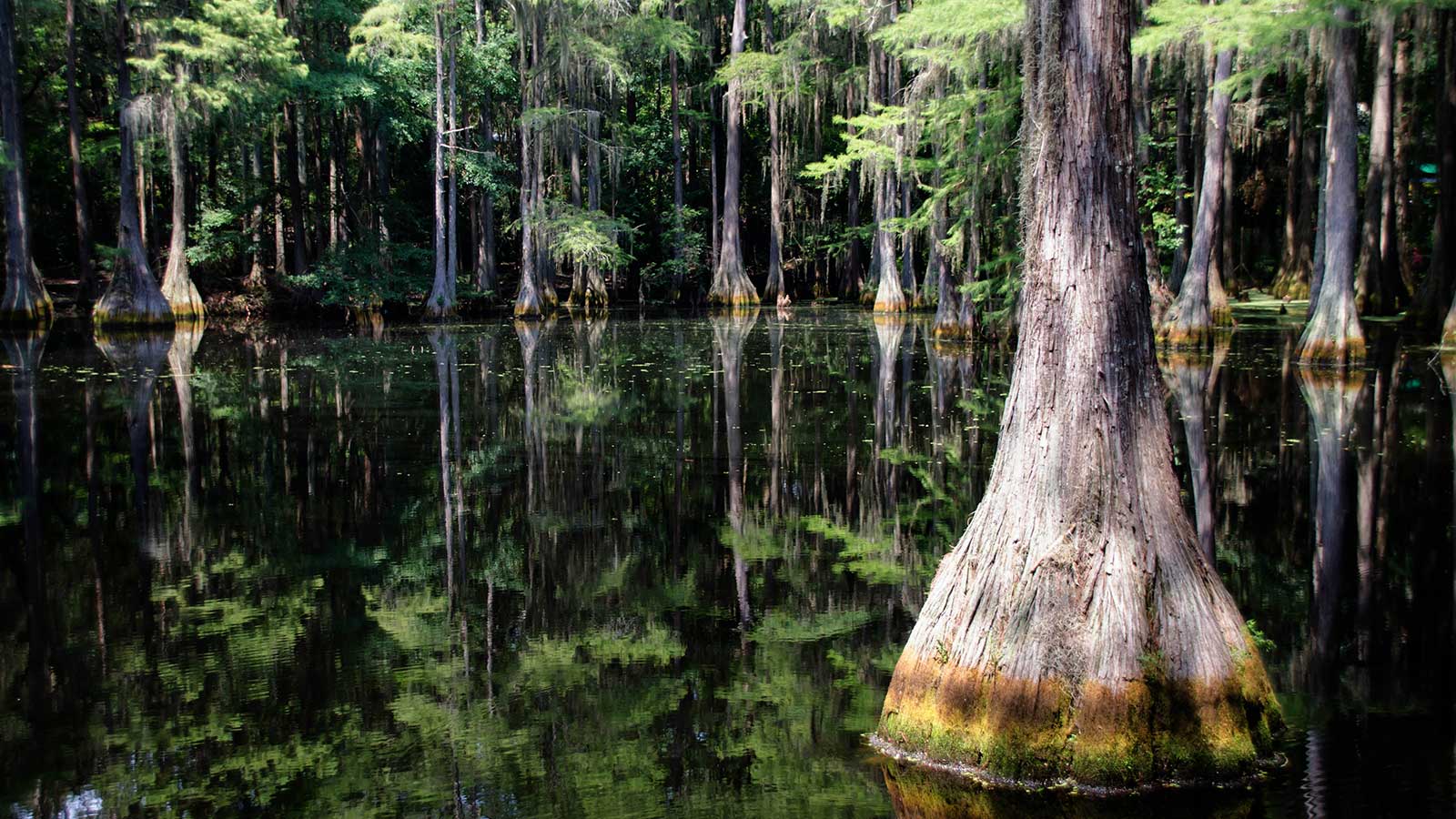
You want to plant a native tree because you know it is one of the most powerful things anyone can do to help heal Earth. You know that trees, especially native ones, are essential to a healthy natural world. Each tree planted helps restore lost habitat and transforms a typical sub/urban wasteland into a thriving natural community that supports humans and all the other life we share it with. But there are so many fabulous native trees to consider, especially here in the Southeast.
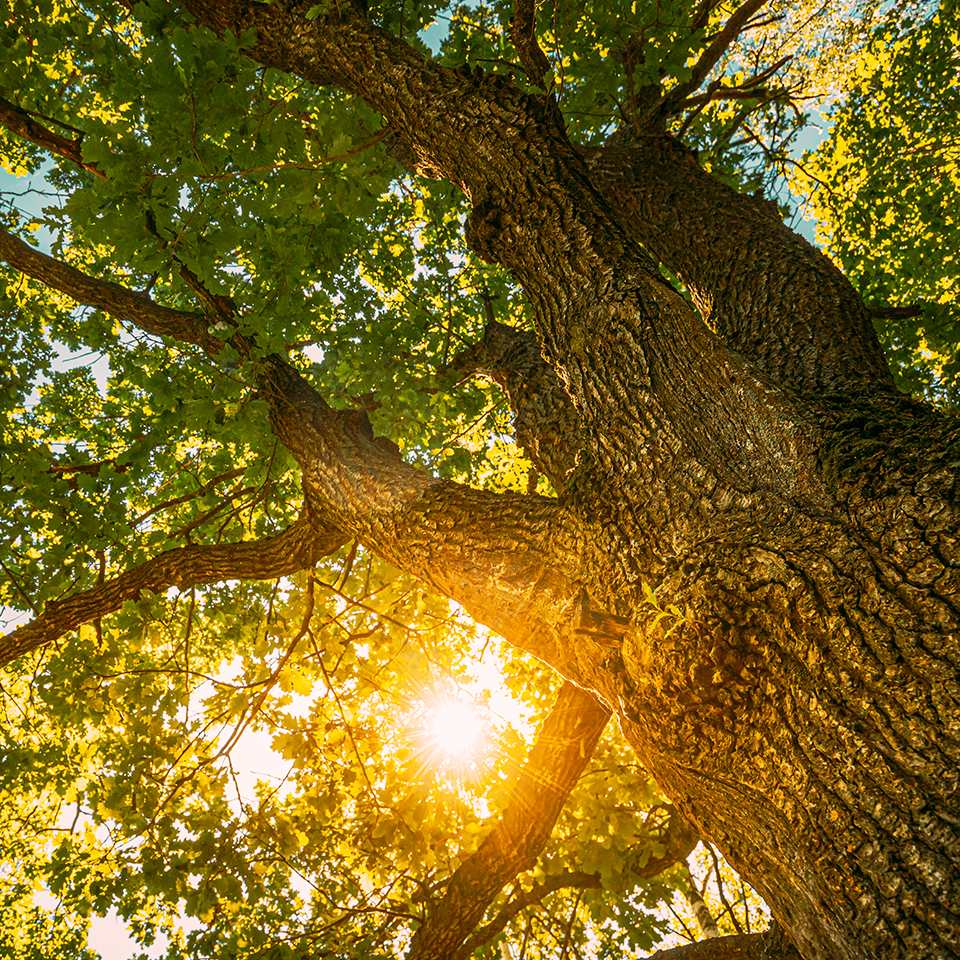
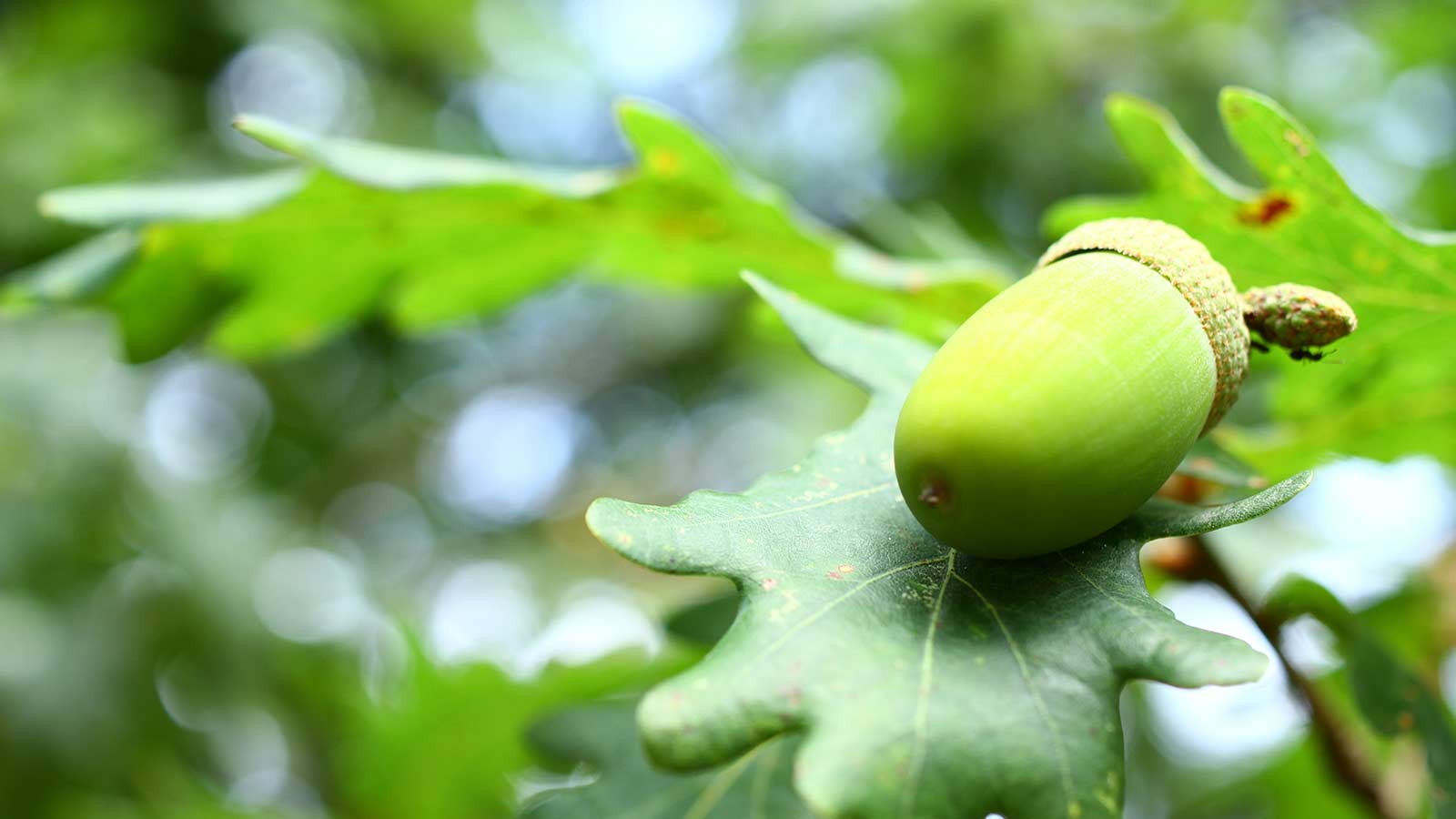
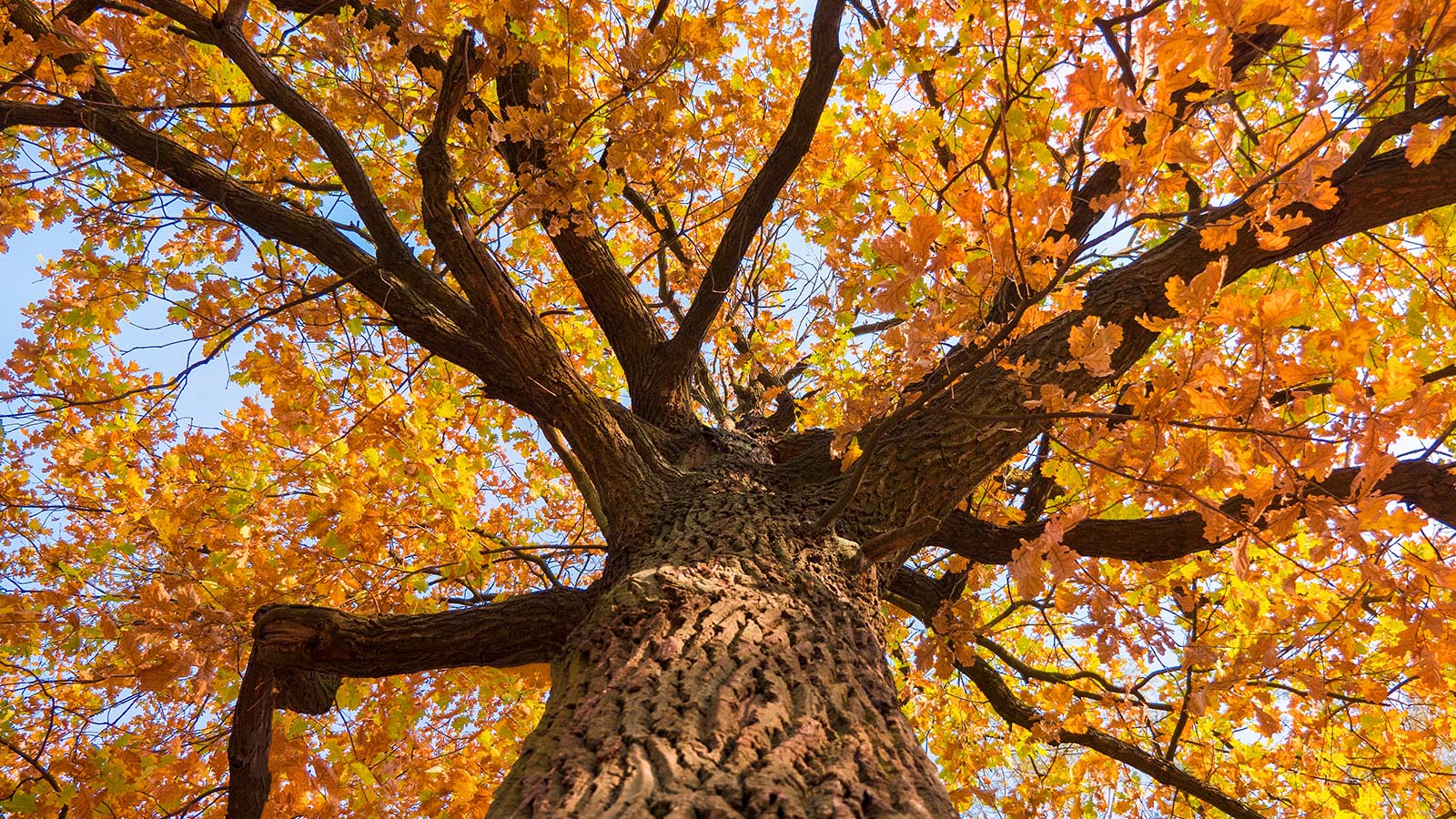
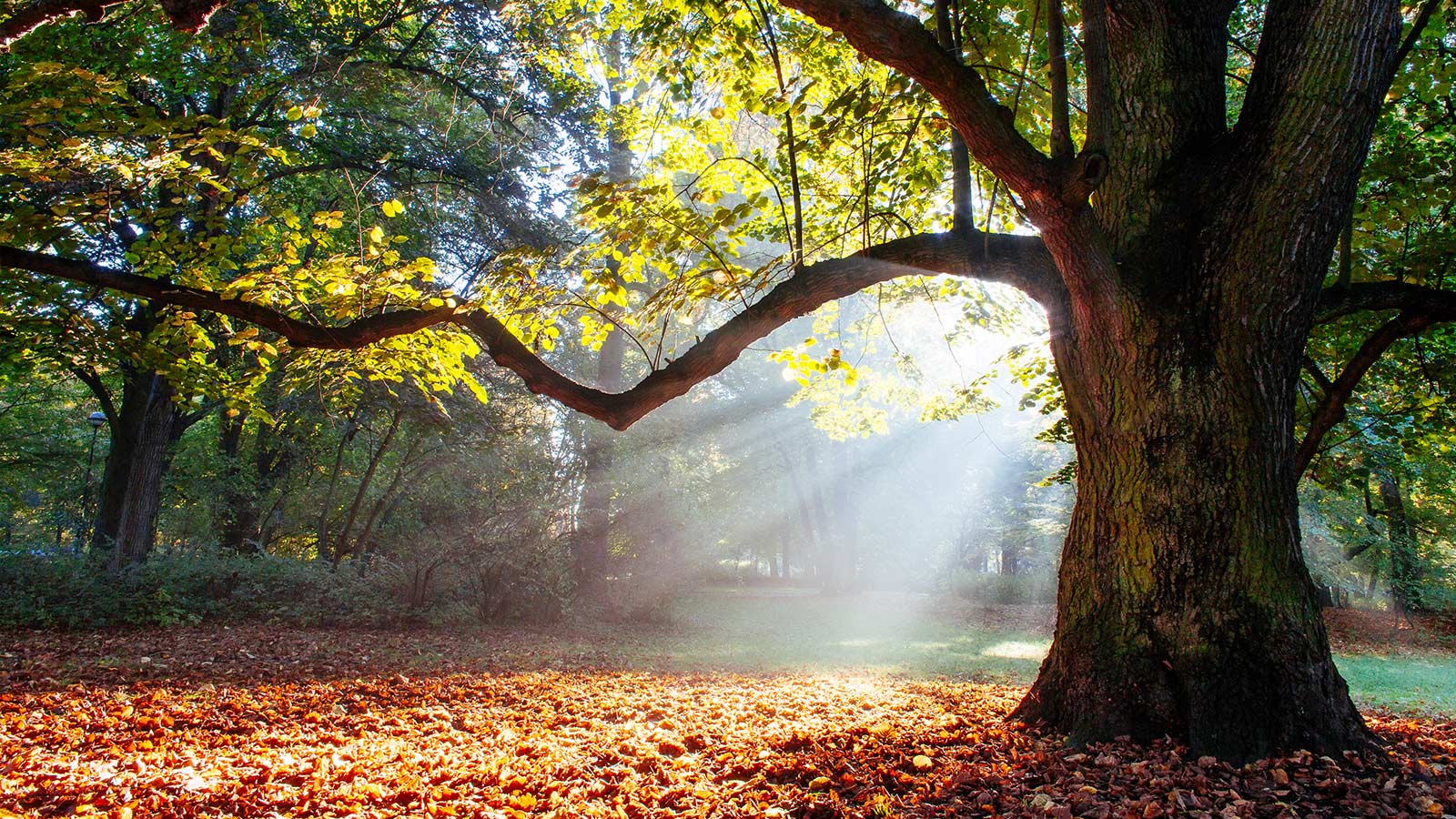
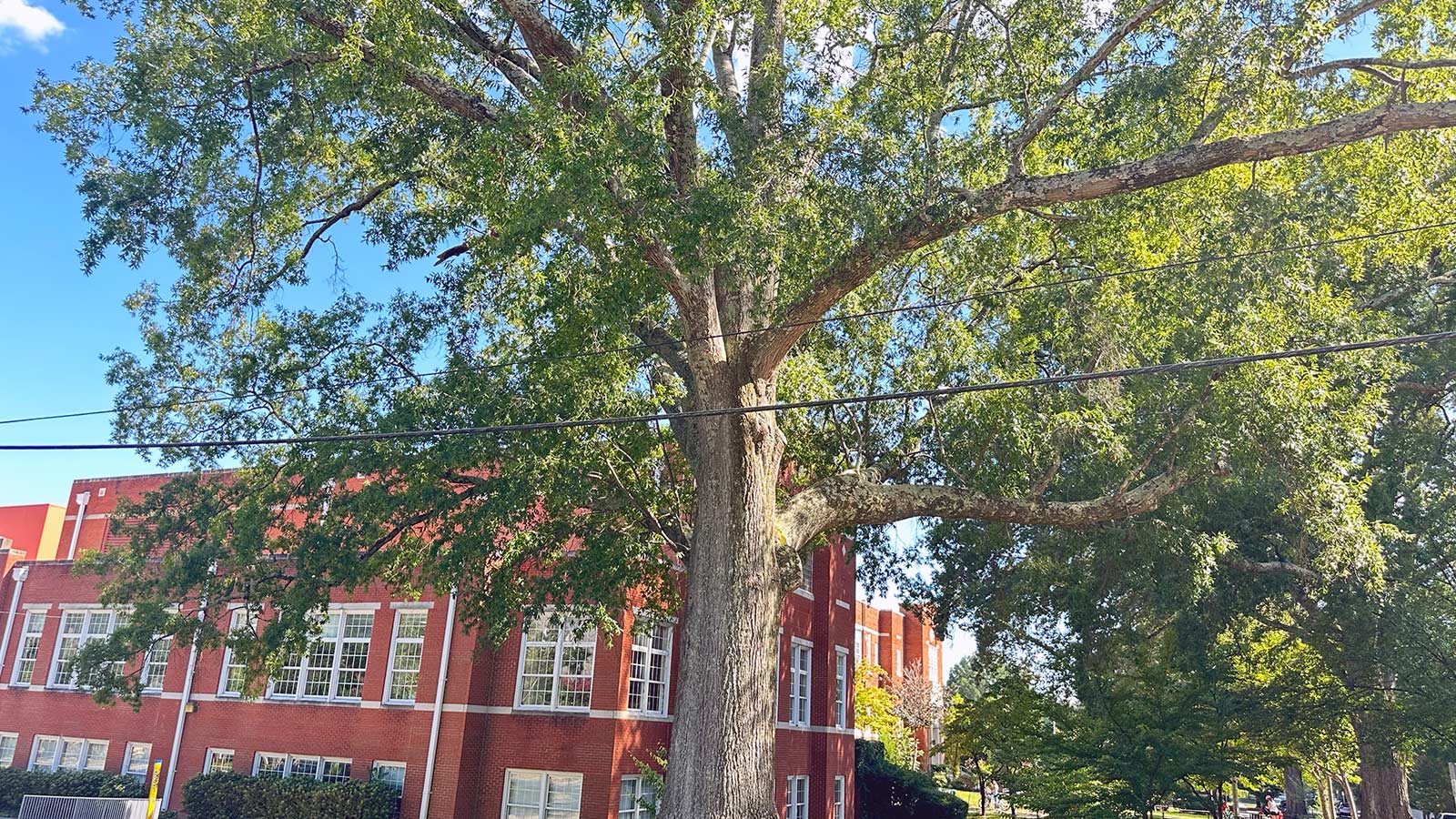
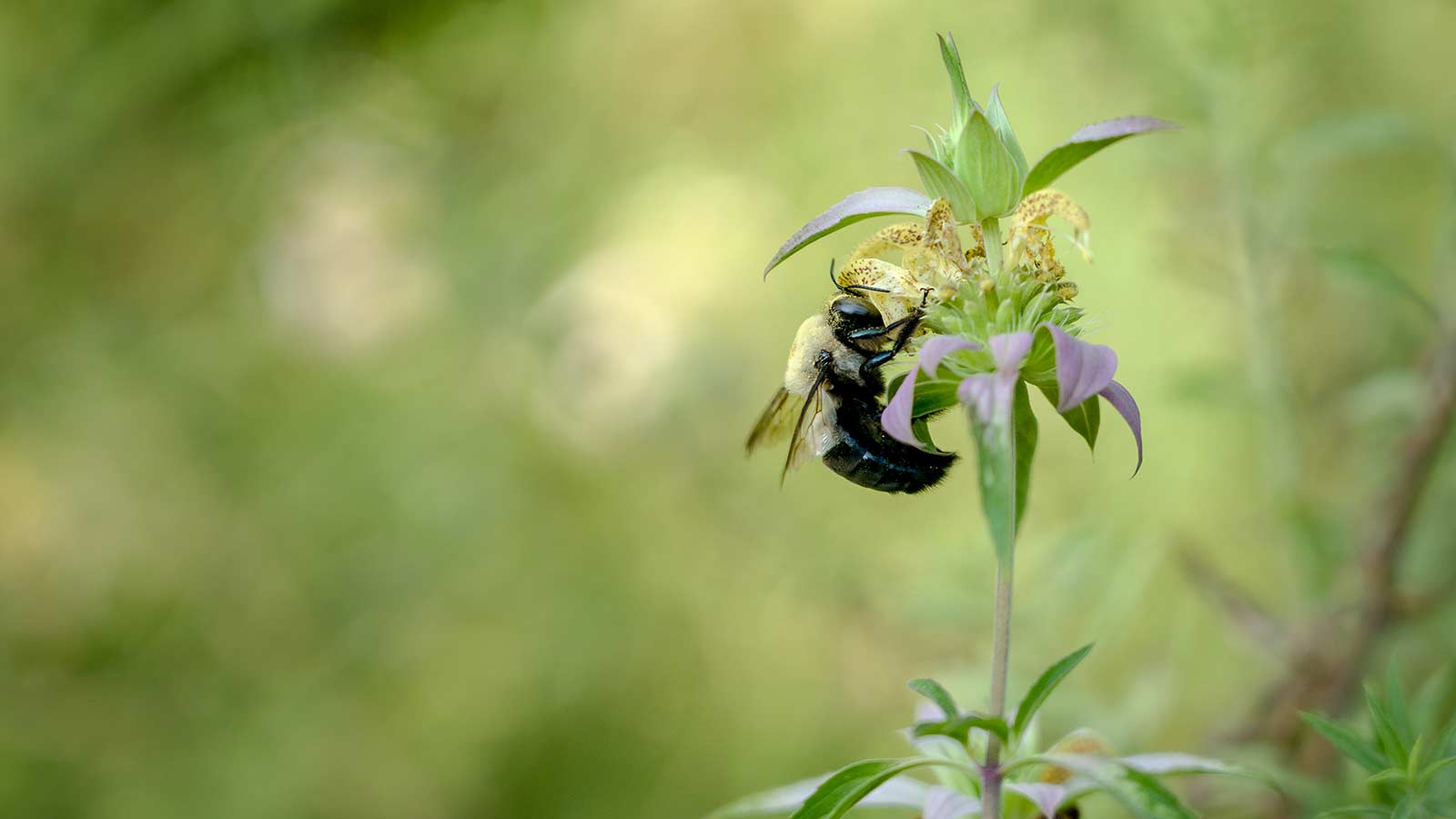
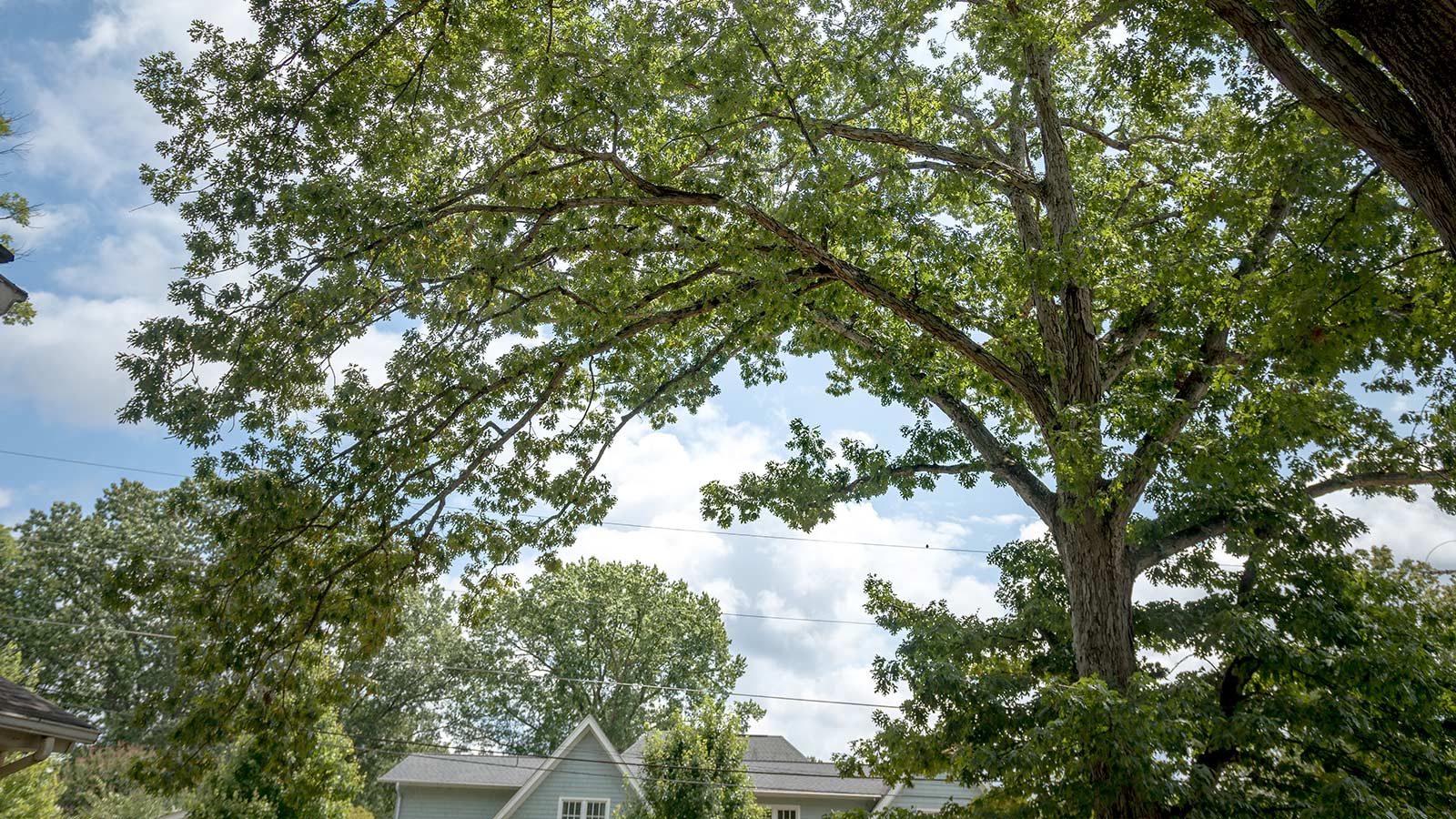
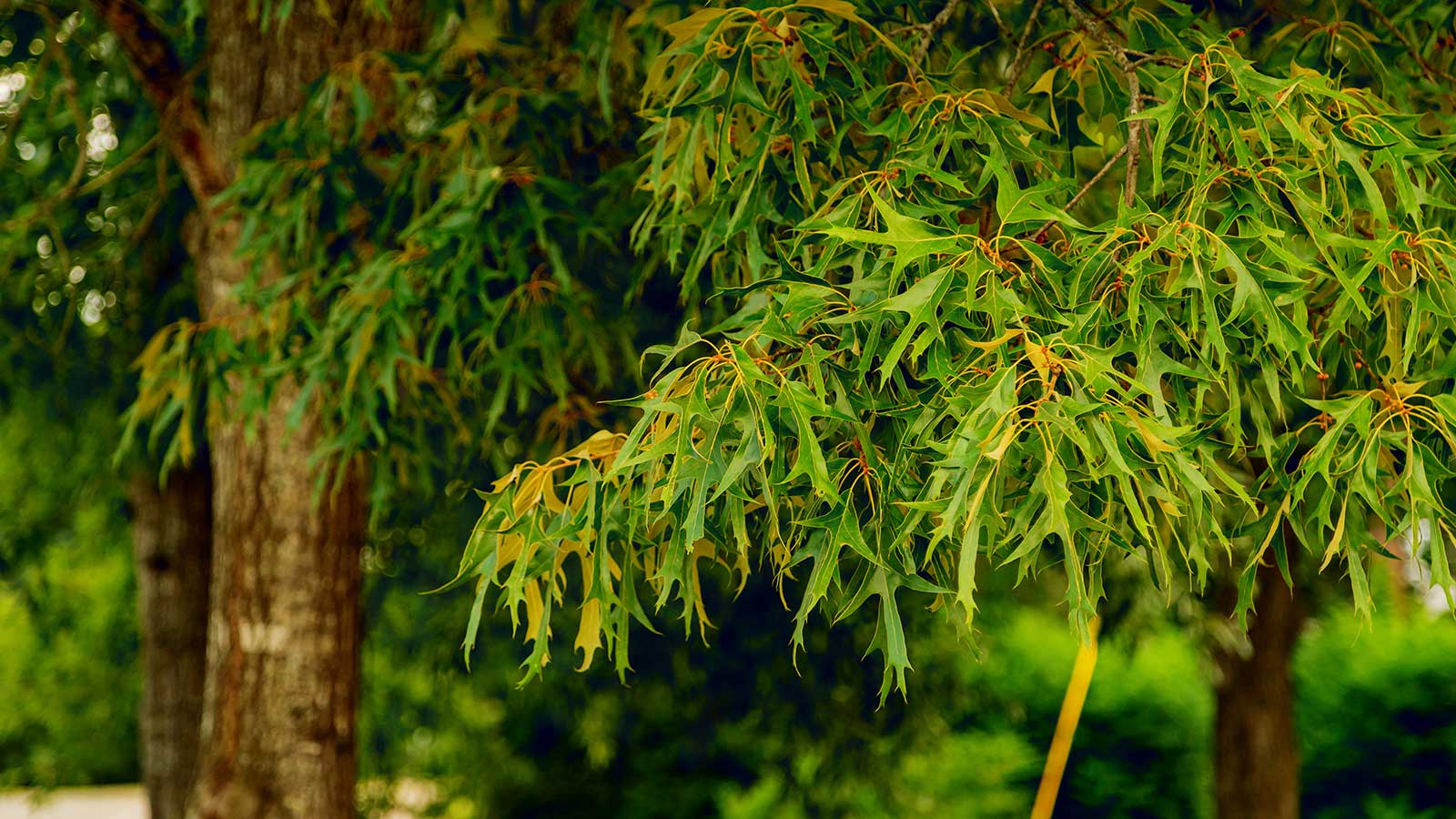
Should you pick a big white oak because it supports hundreds of species of caterpillars alone, and those caterpillars support bird populations? Or maybe a maple for its reliable late Winter flowering tree that early emerging insects, like bumble bee queens, rely on? Choosing the best one can be overwhelming. You want to get it right because trees are a long-term investment for the future.
A Guided Walk
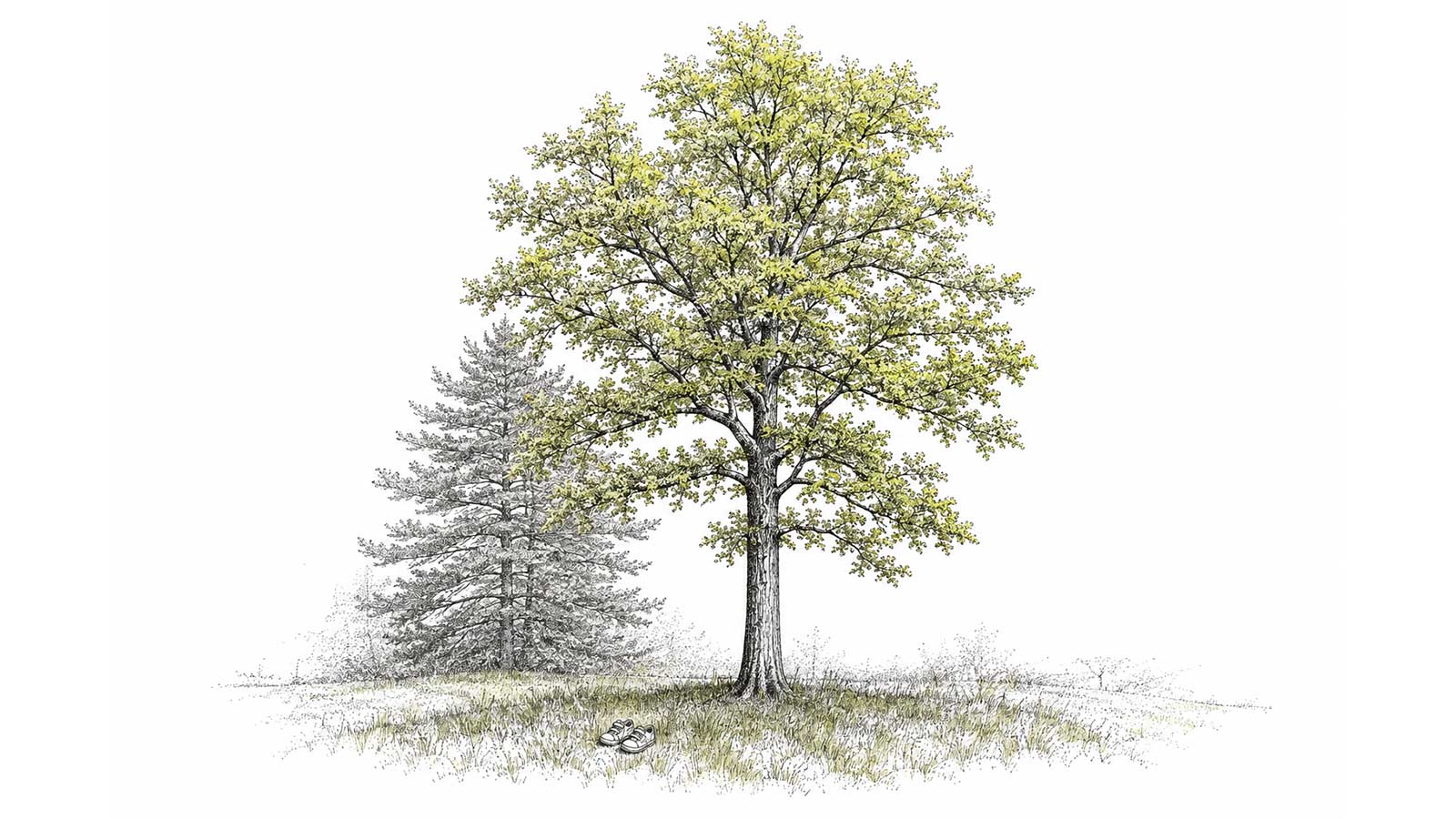
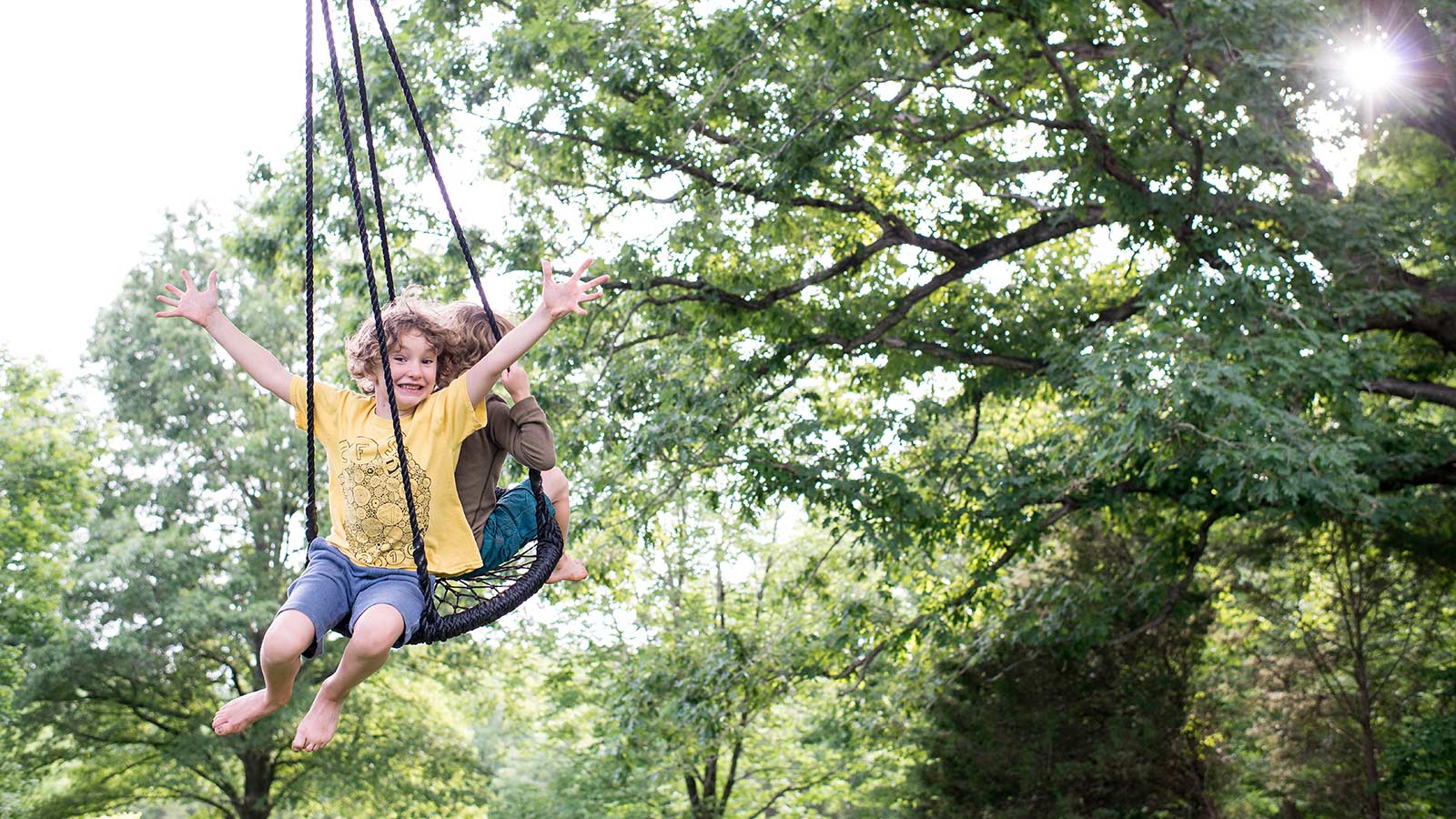
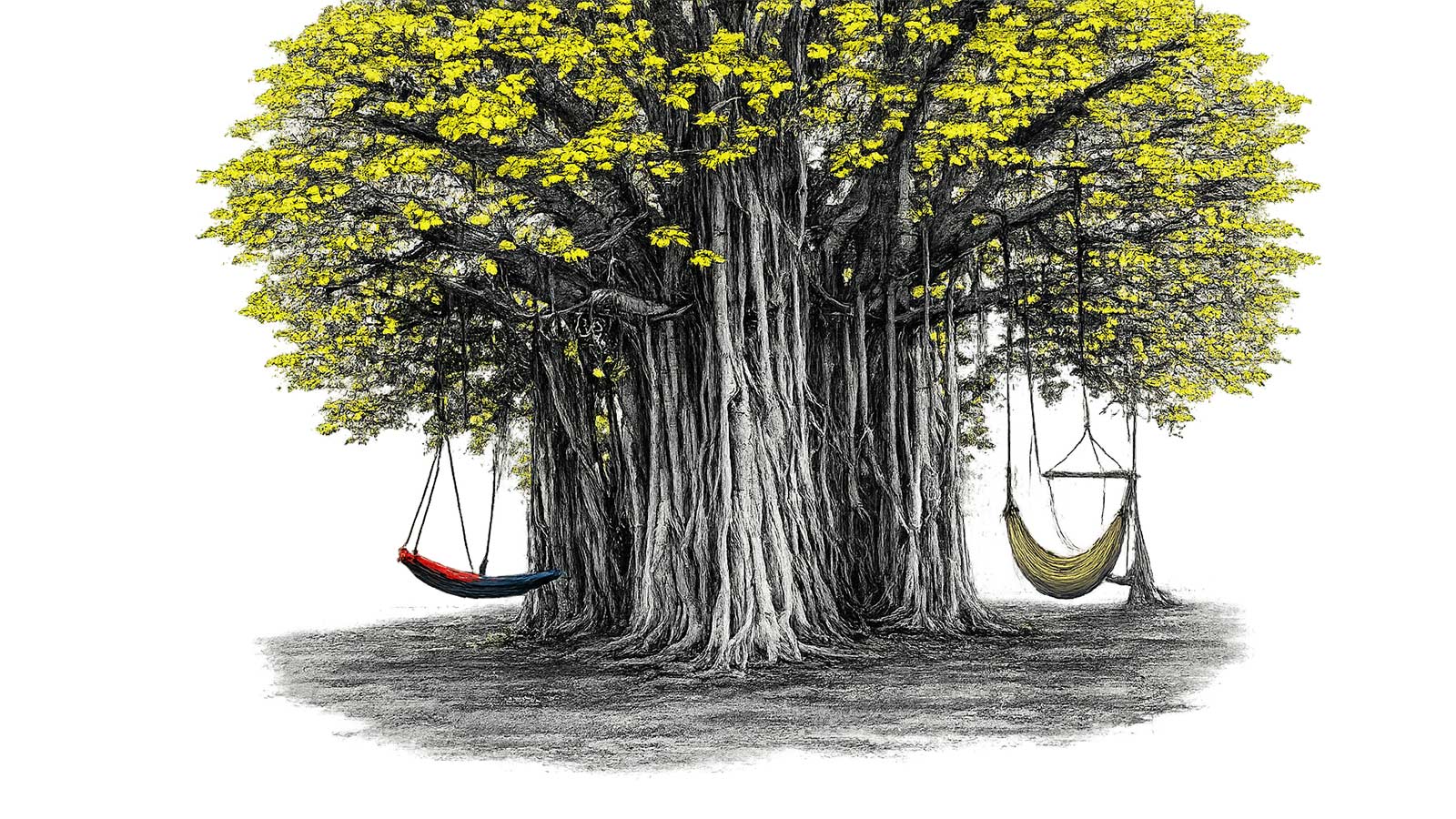
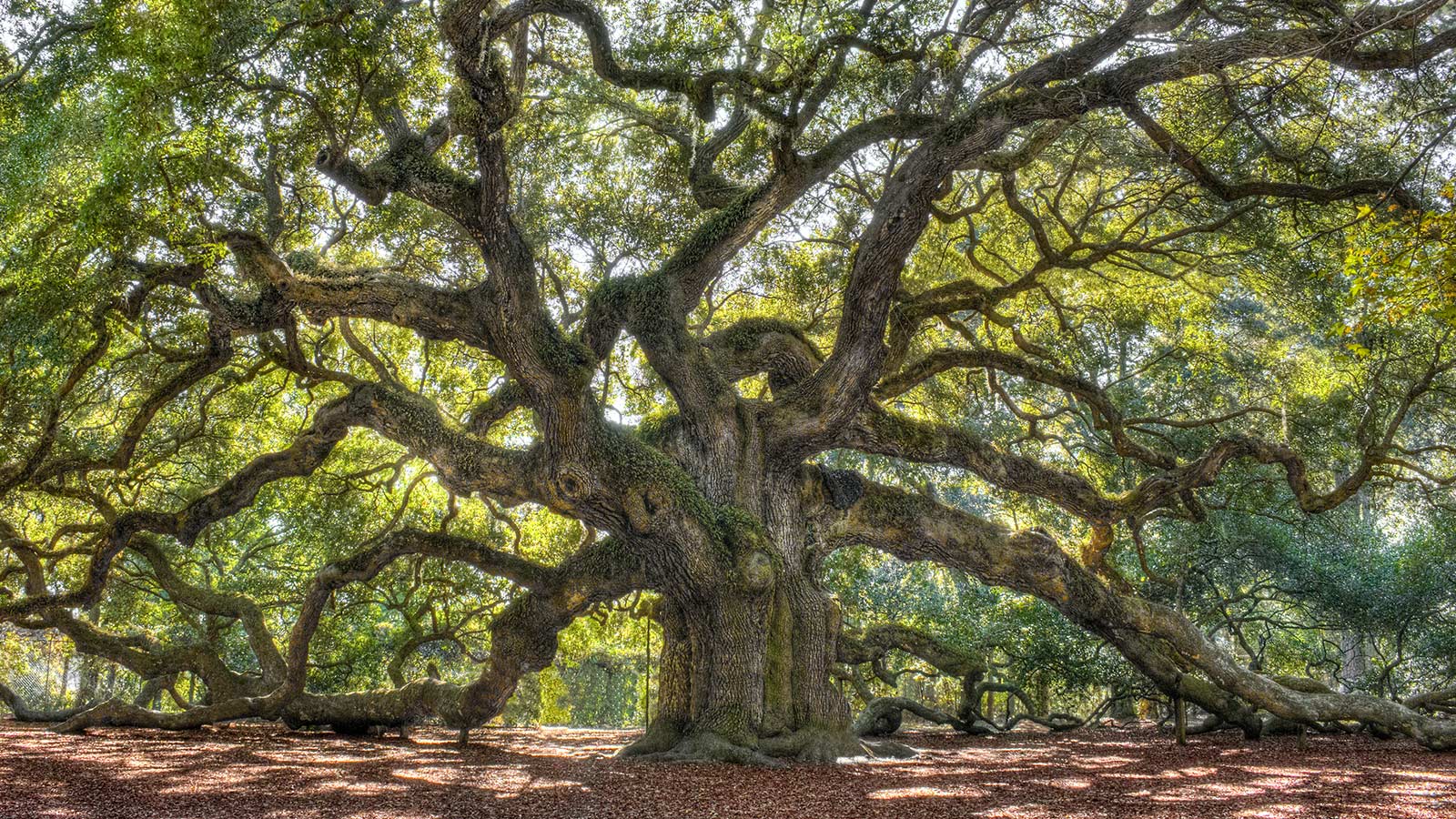
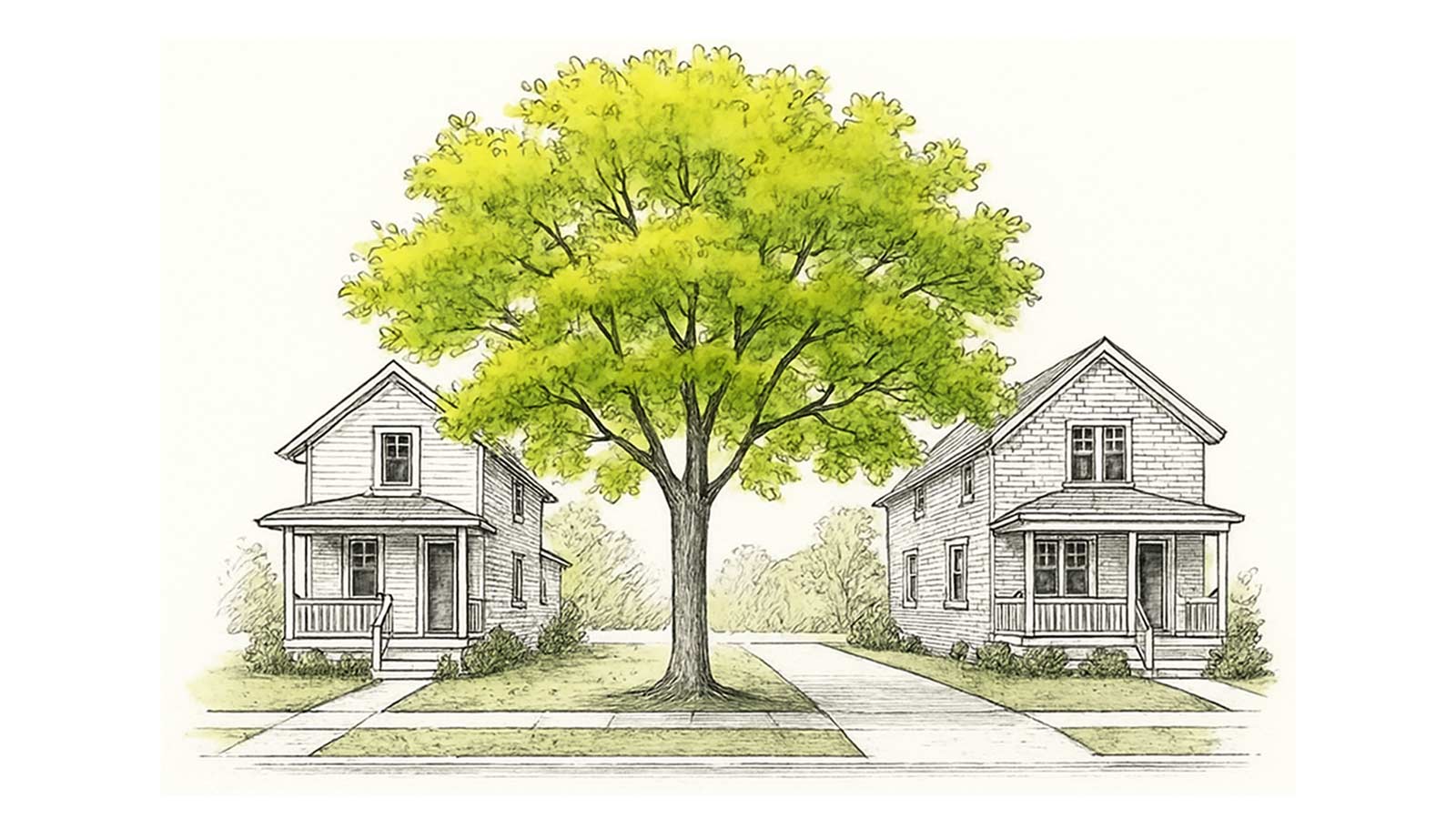
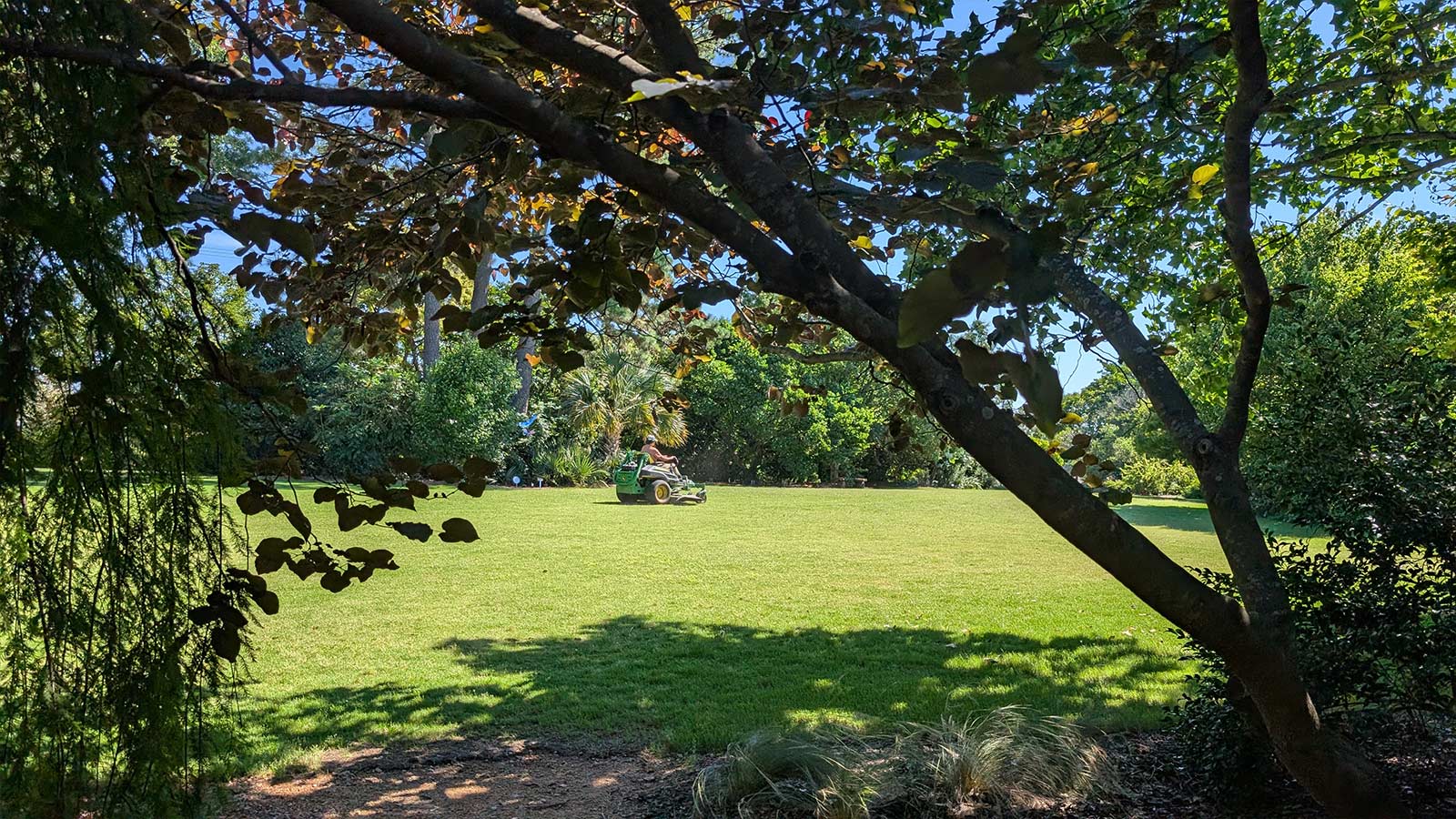
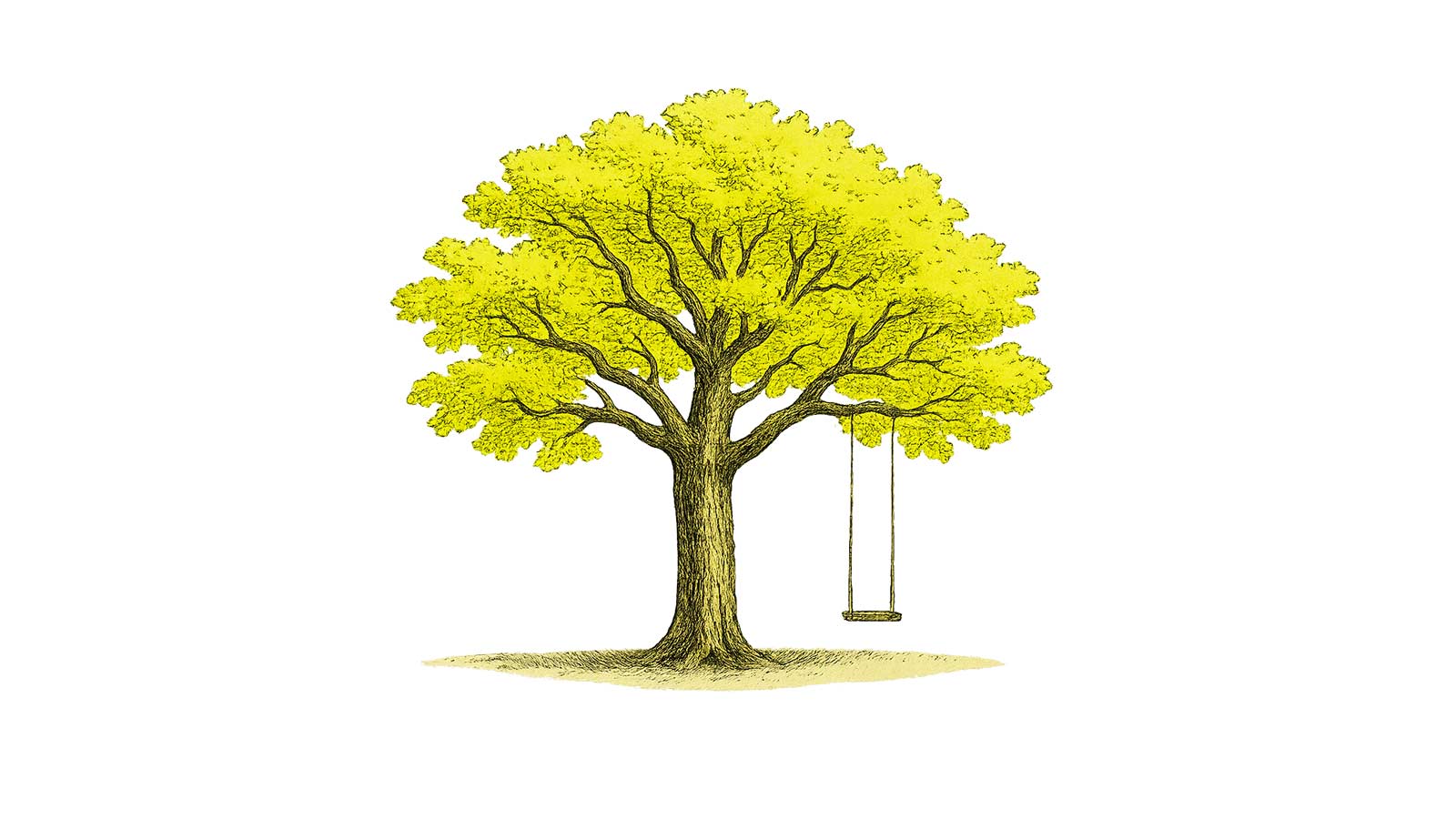
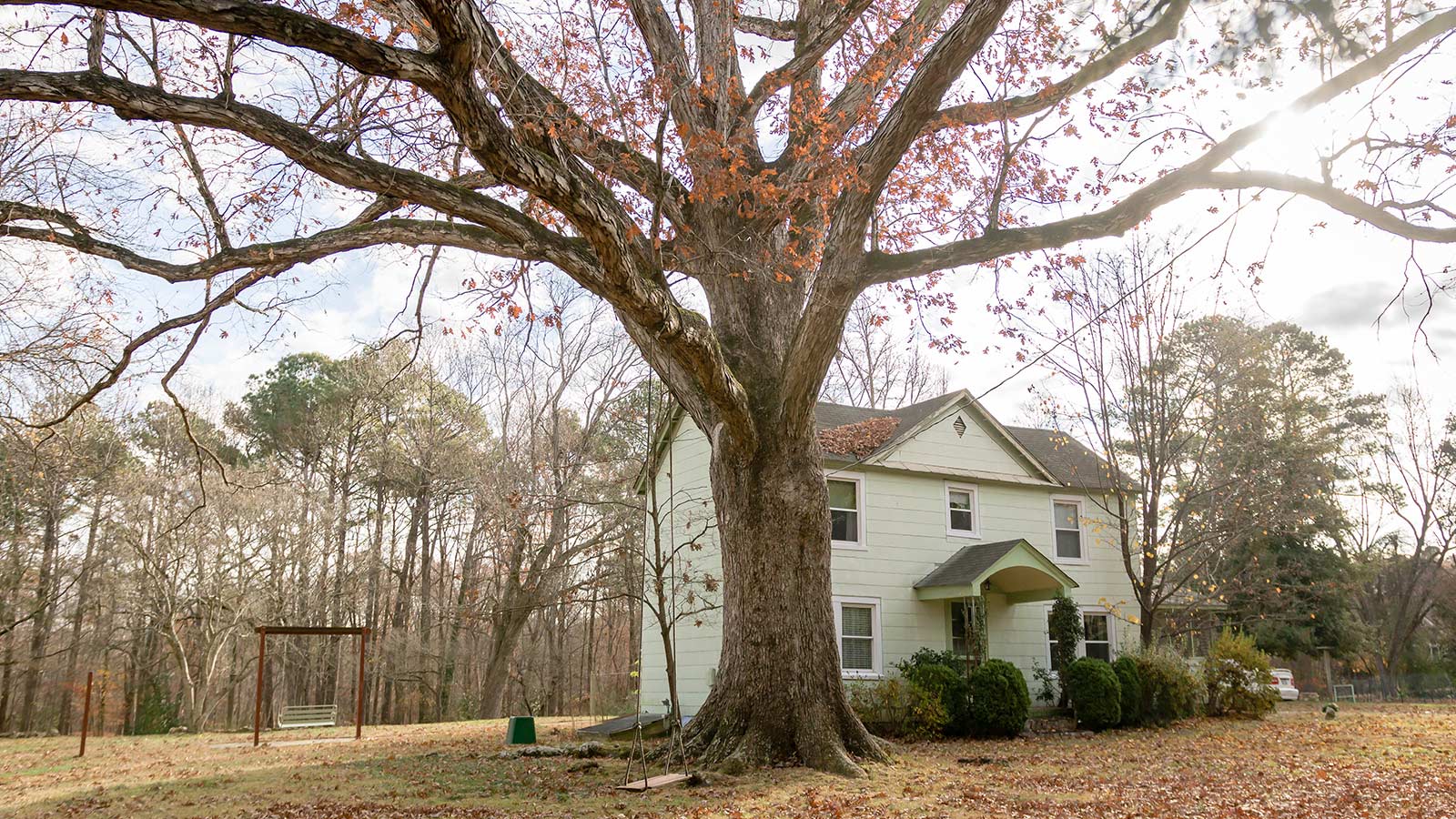
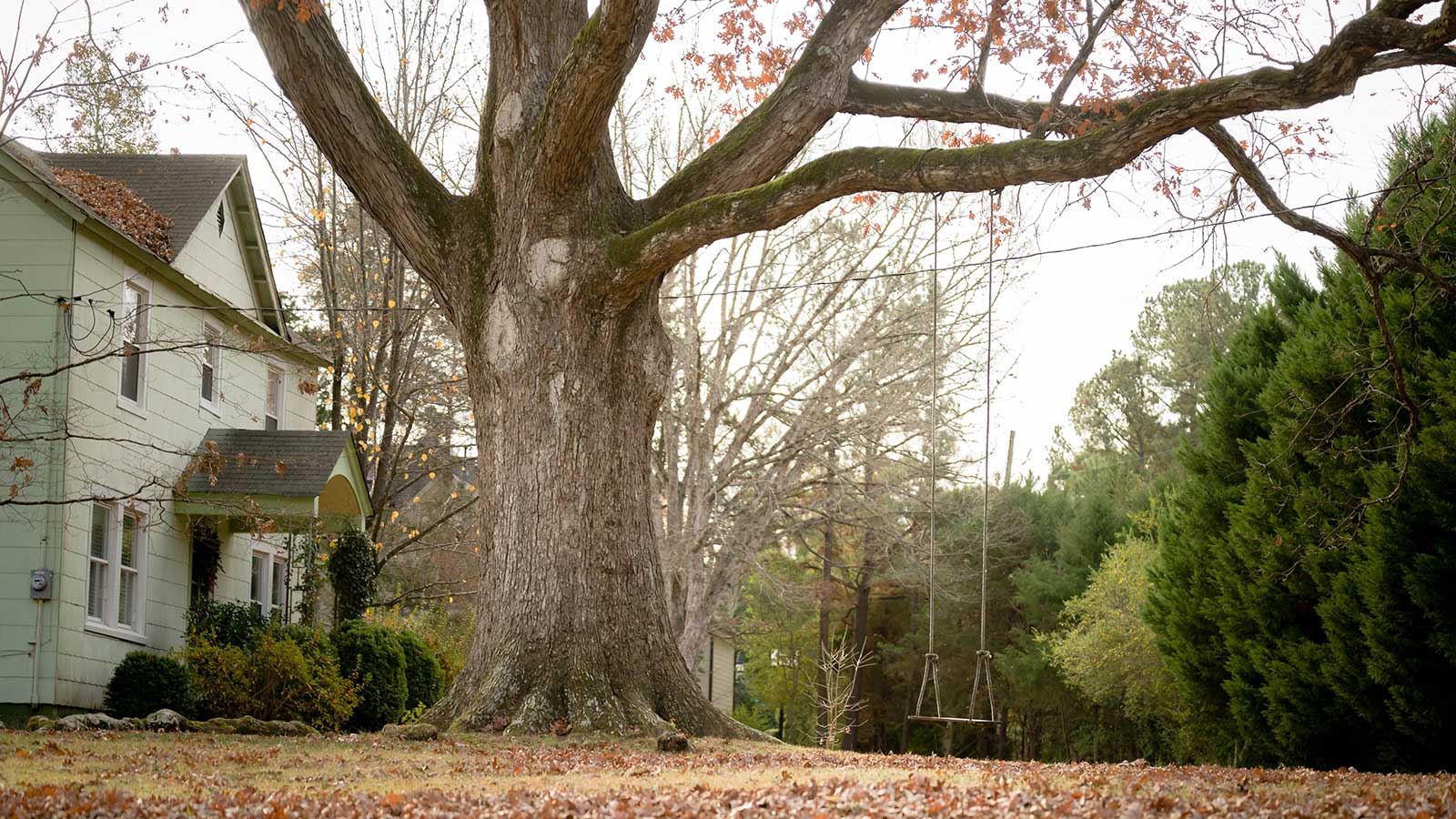
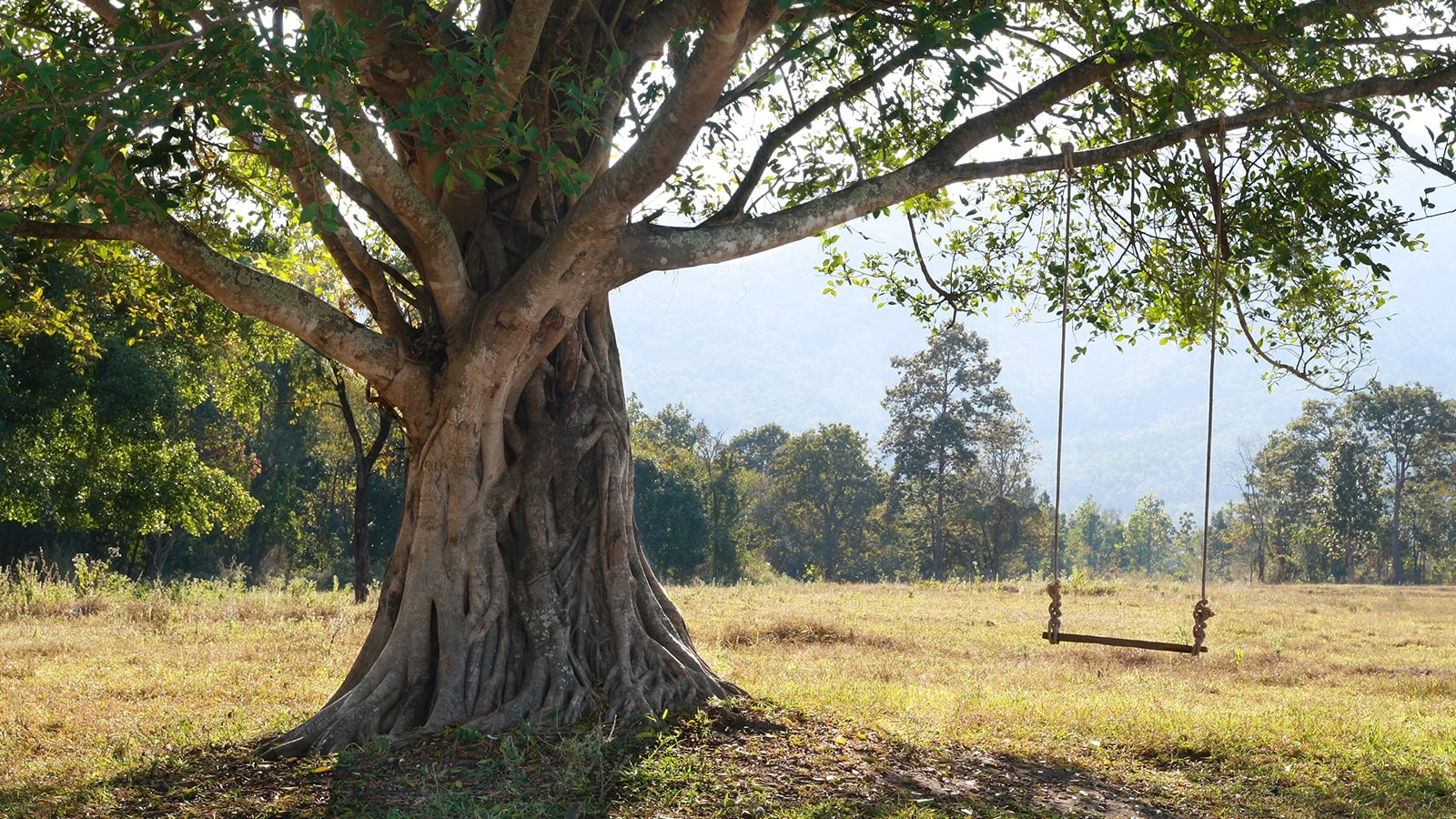
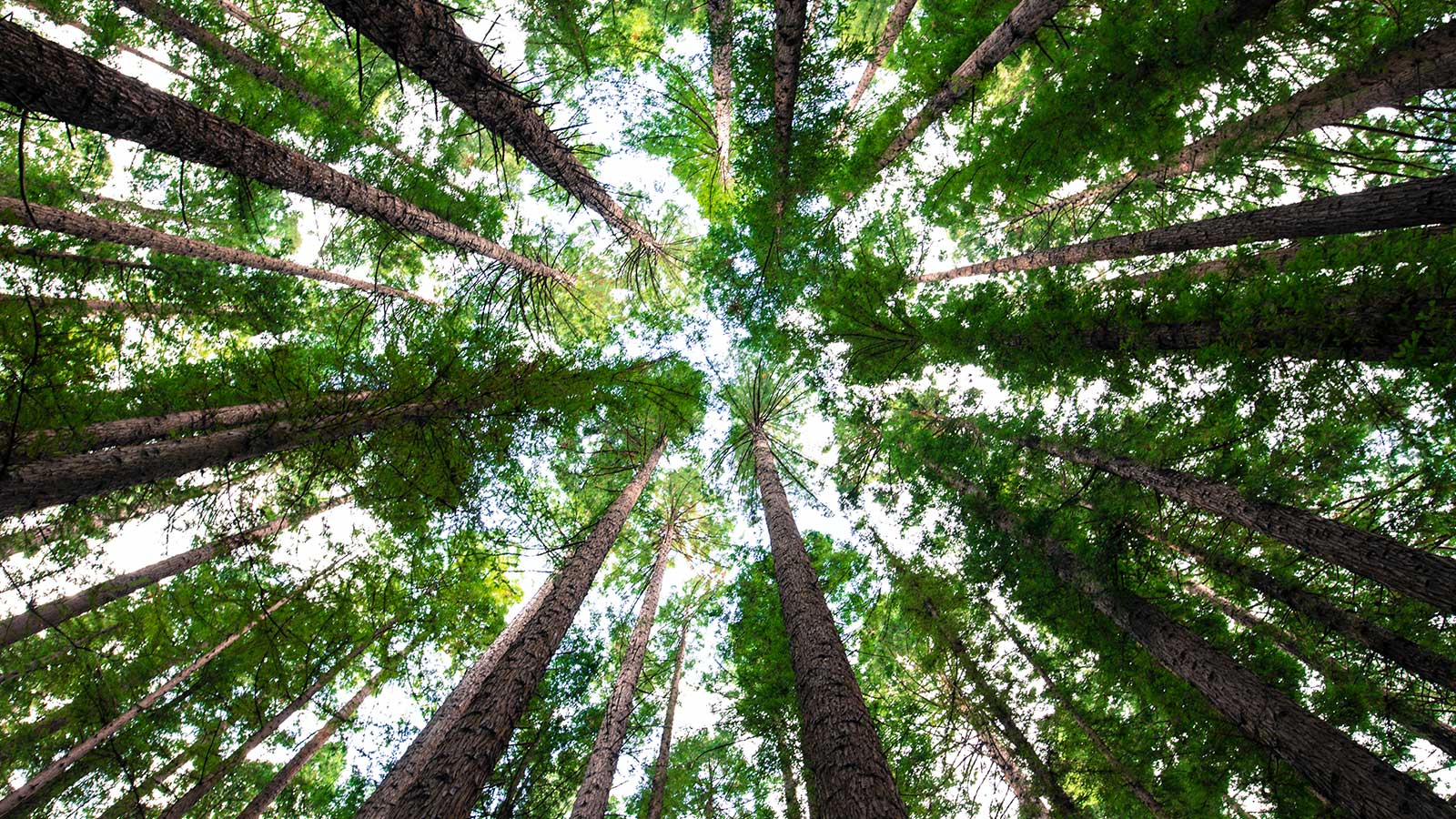
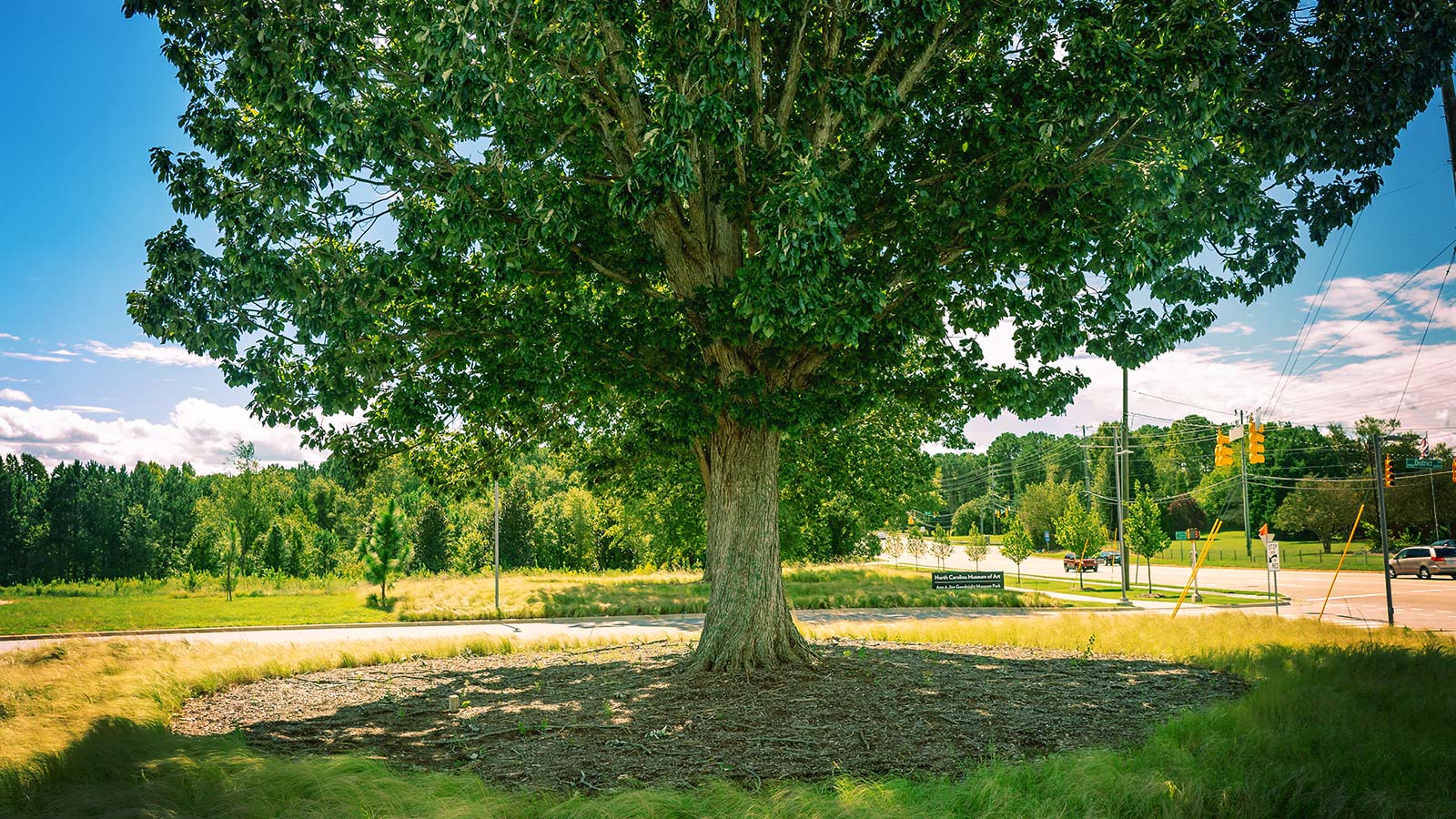
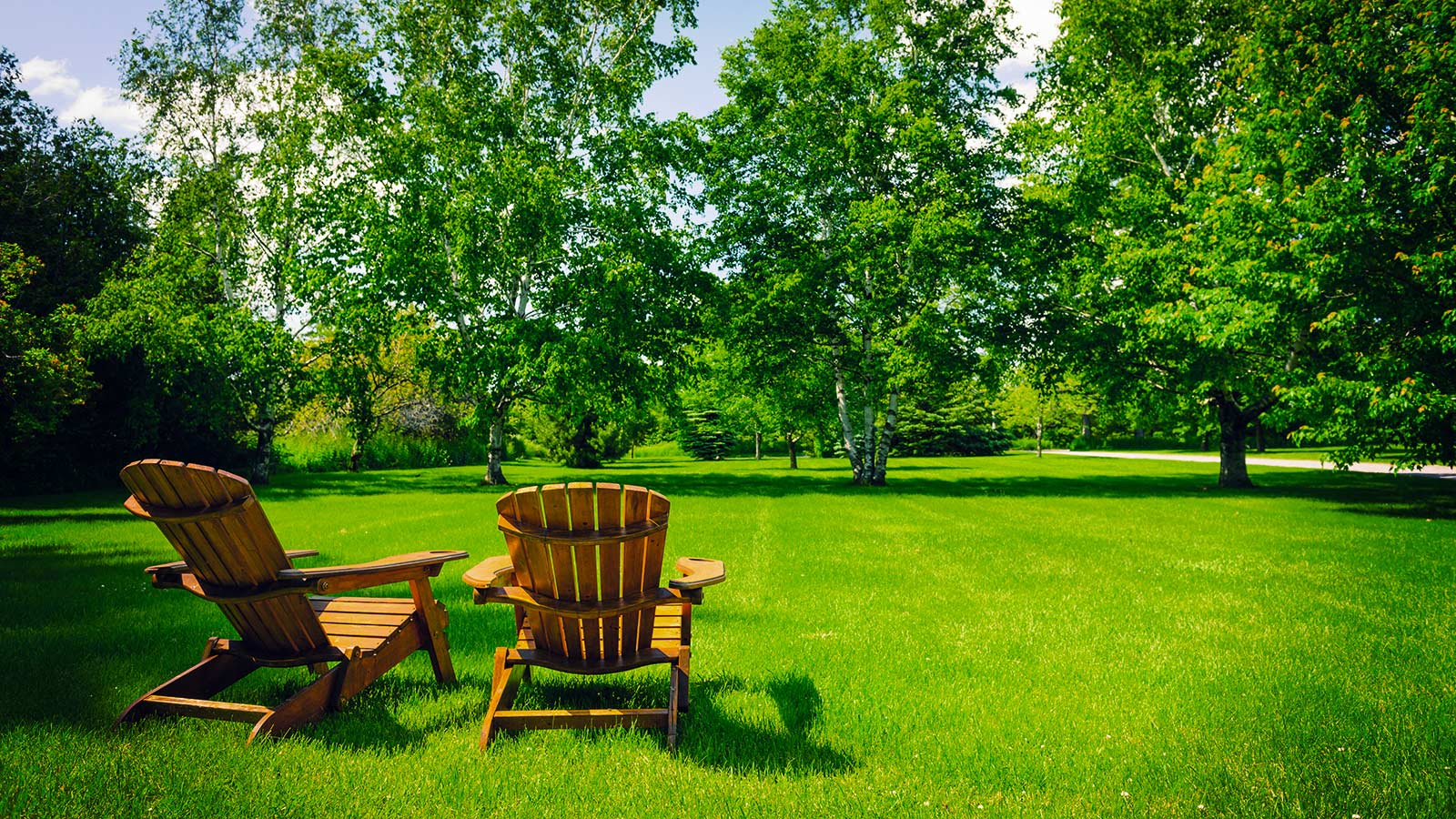
Start right where you are in your yard. As you walk and observe your yard's features, ask yourself what you imagine this tree to be. A large, sweeping lawn could hold the root mass of a stately legacy tree, perhaps a big oak that will one day dominate with a generous, shady canopy for future generations to sit beneath.
If Your Space Is Limited
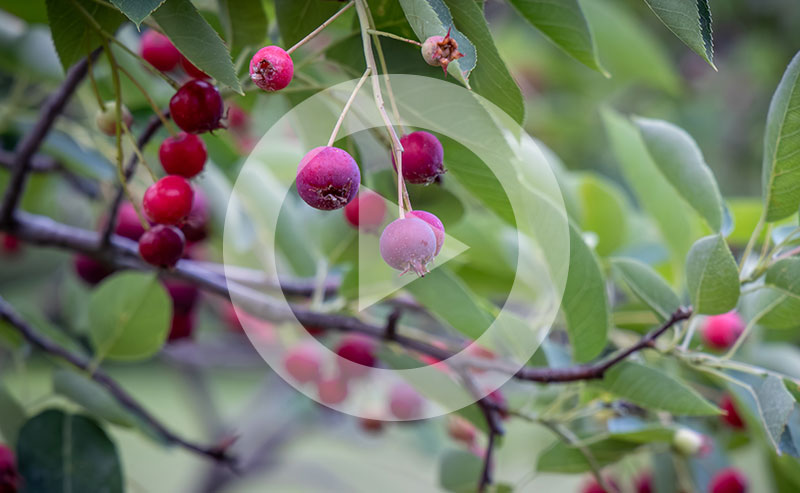
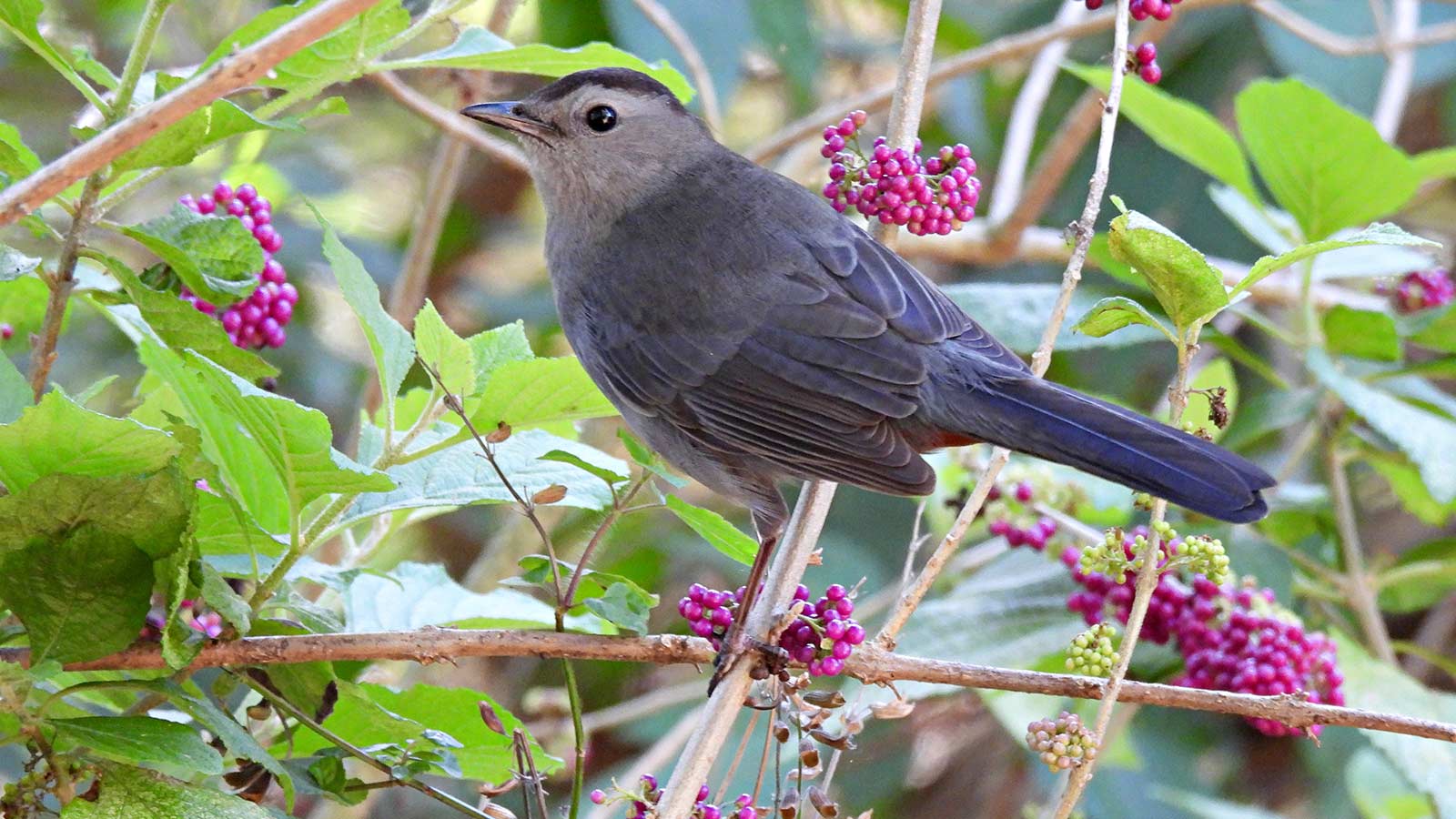
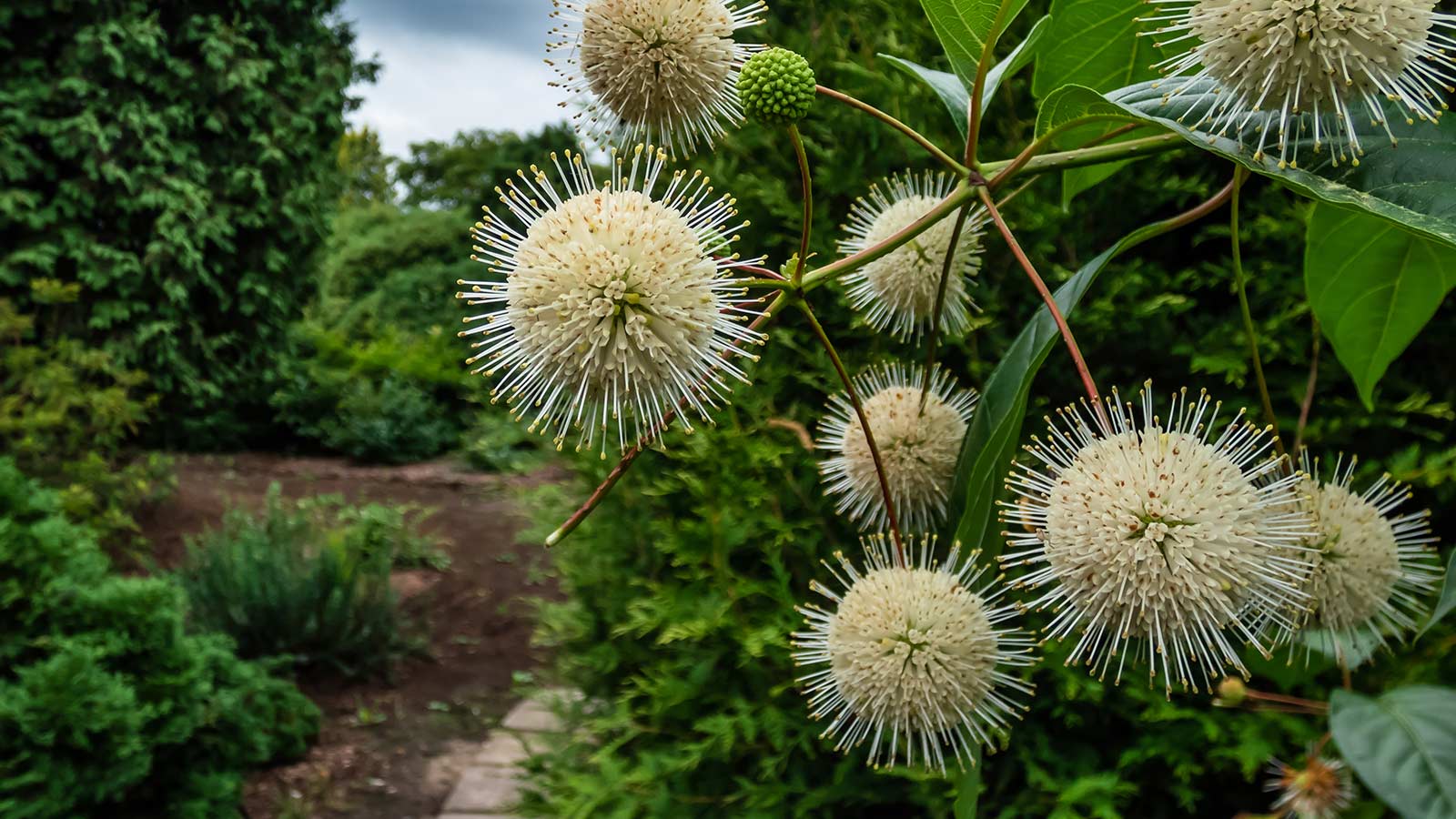
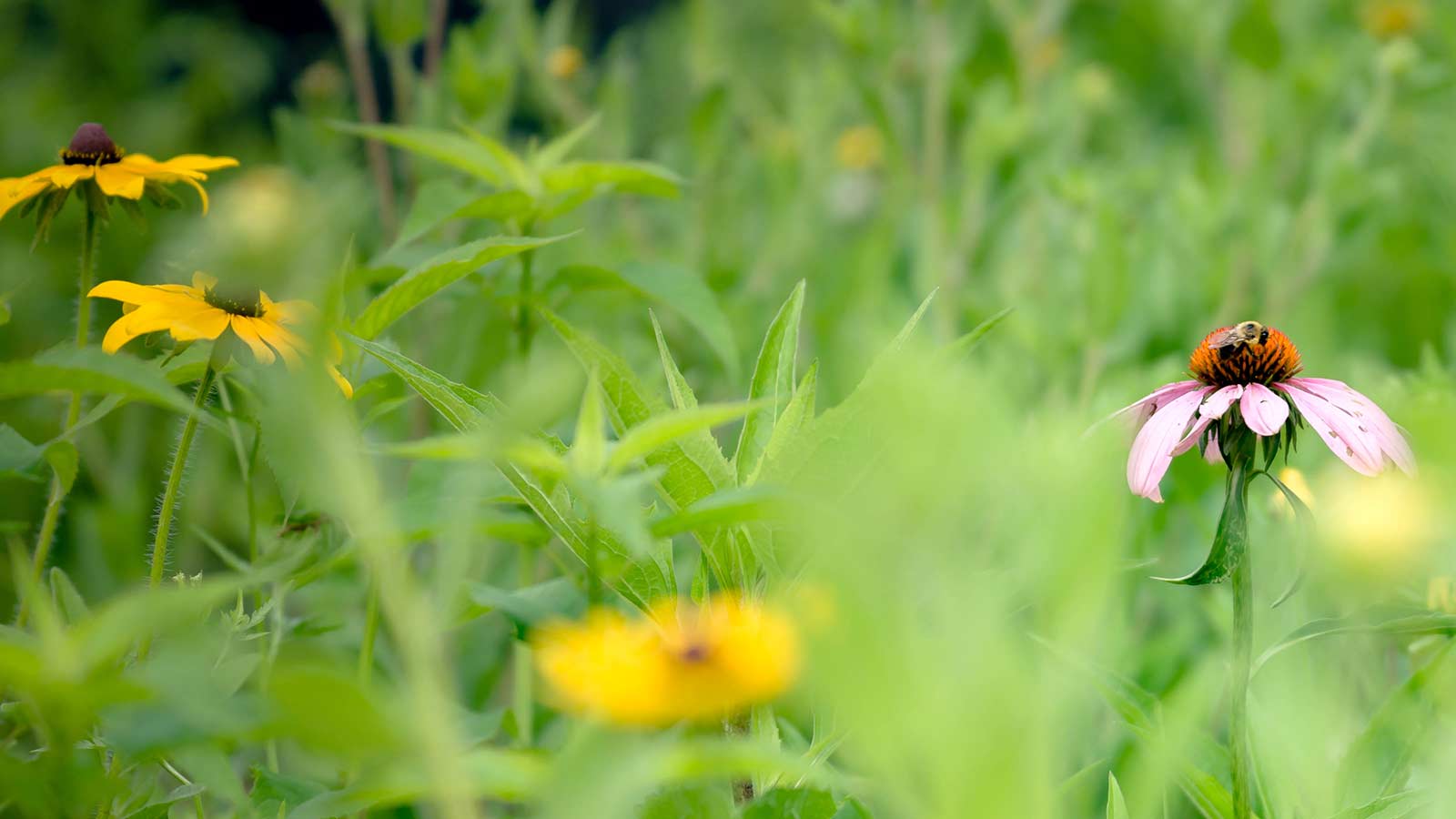
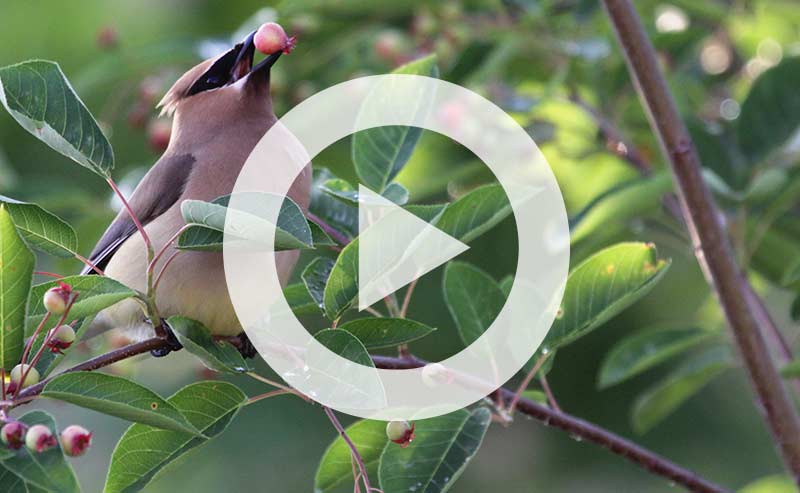
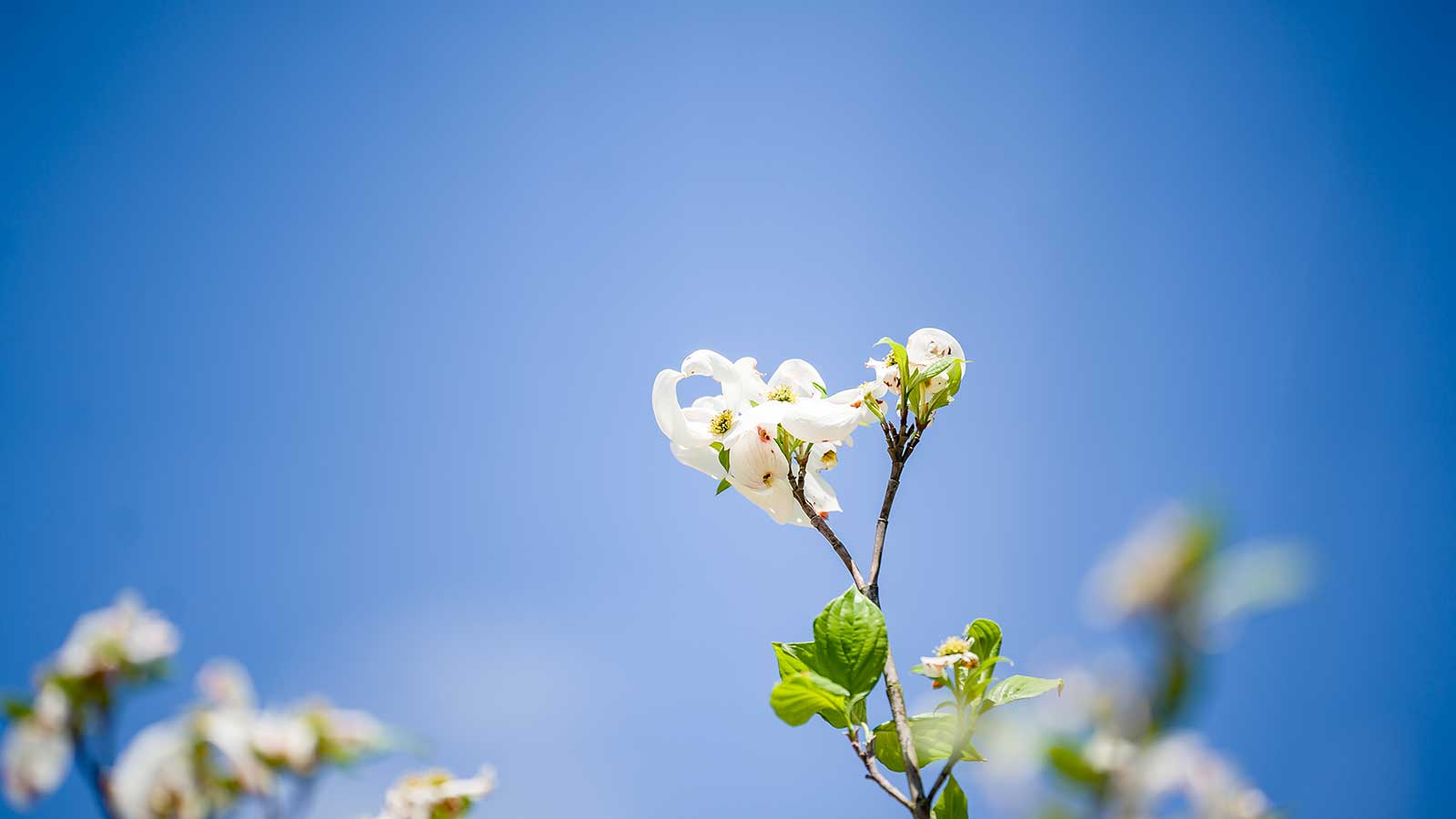
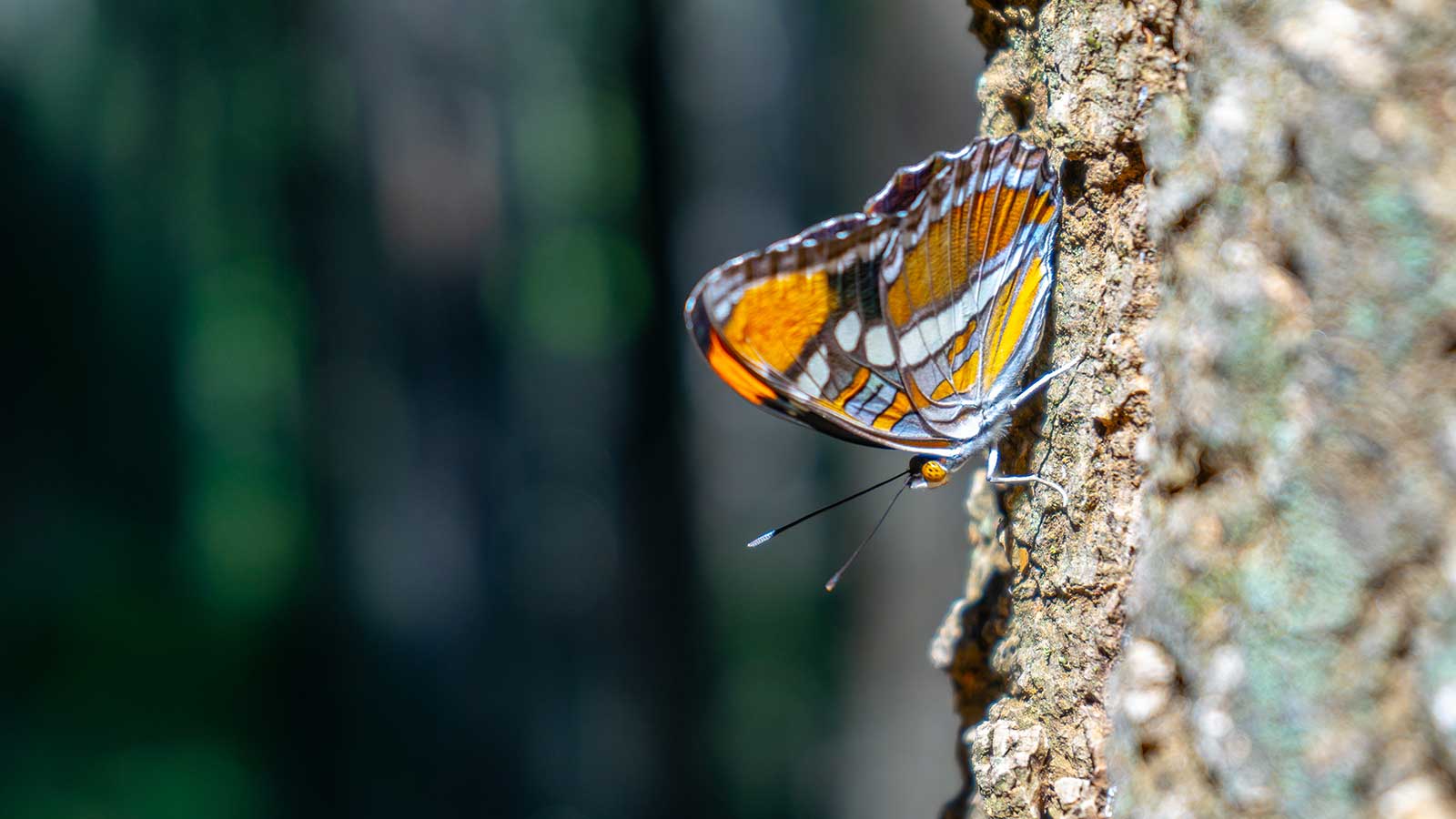
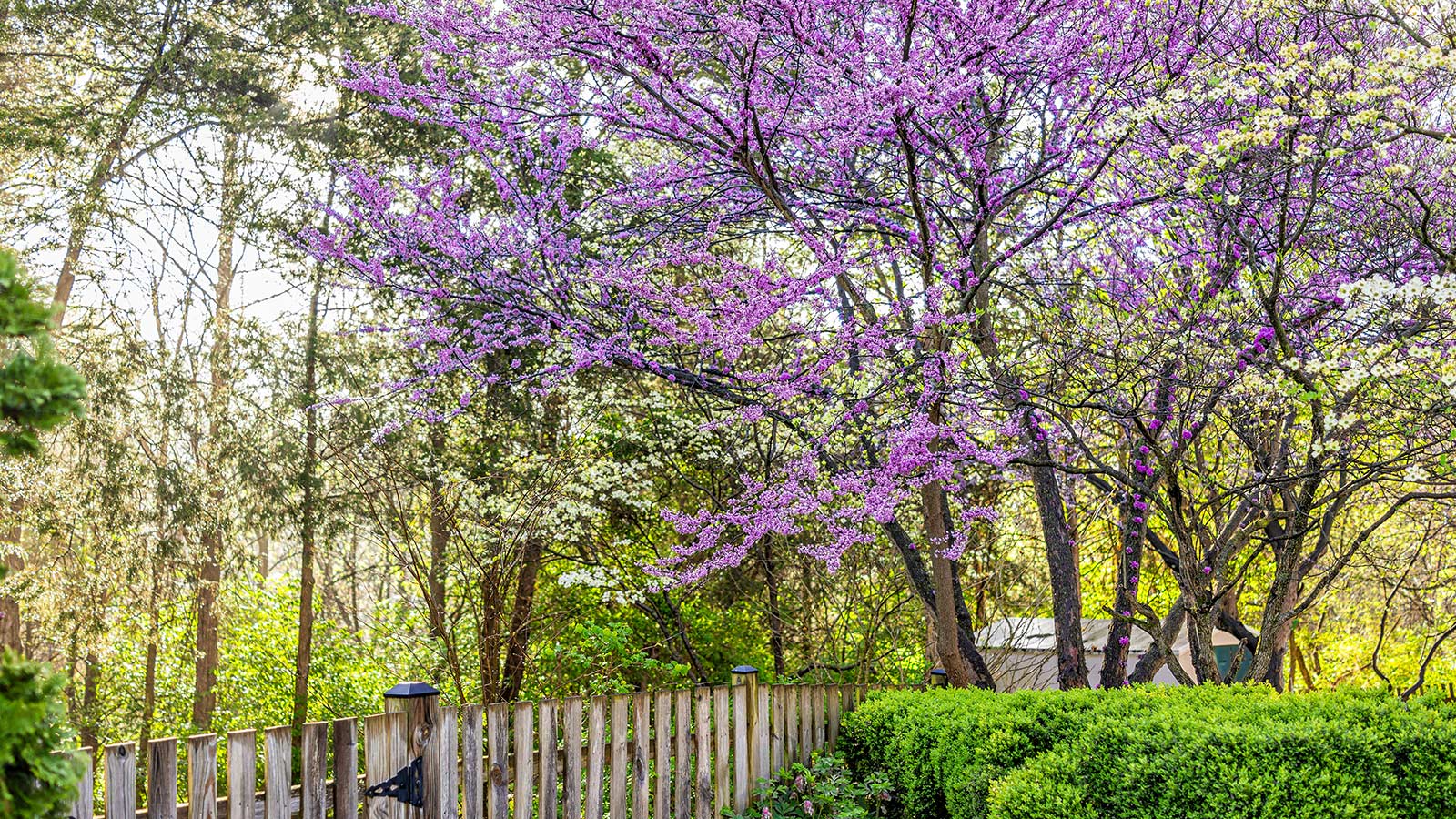
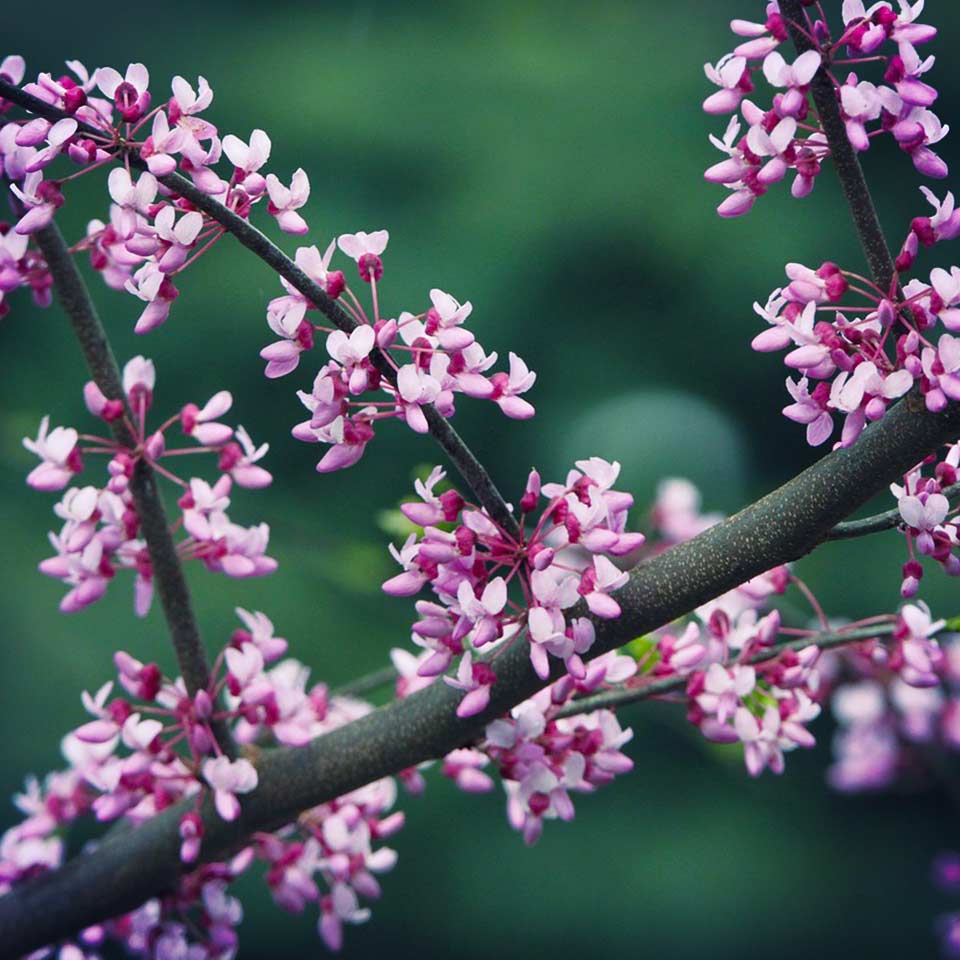
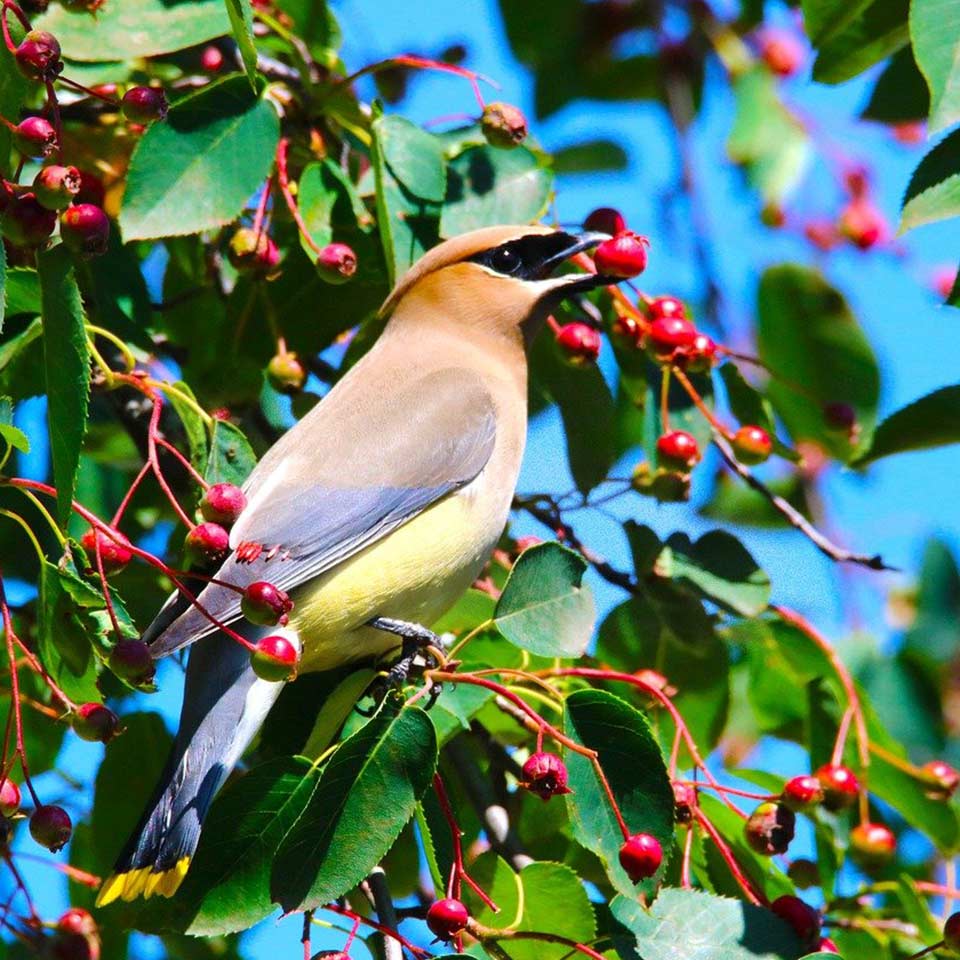
A small tree with showy flowers that fits into a small yard yet still attracts many birds and bees might be the ticket. Something like a serviceberry might be perfect. The white flowers in early Spring feed native mining bees awakening from Winter's rest. In late Summer you might find a catbird picking amongst the limbs for the delicious fruit.
A Tree for a Favorite Window
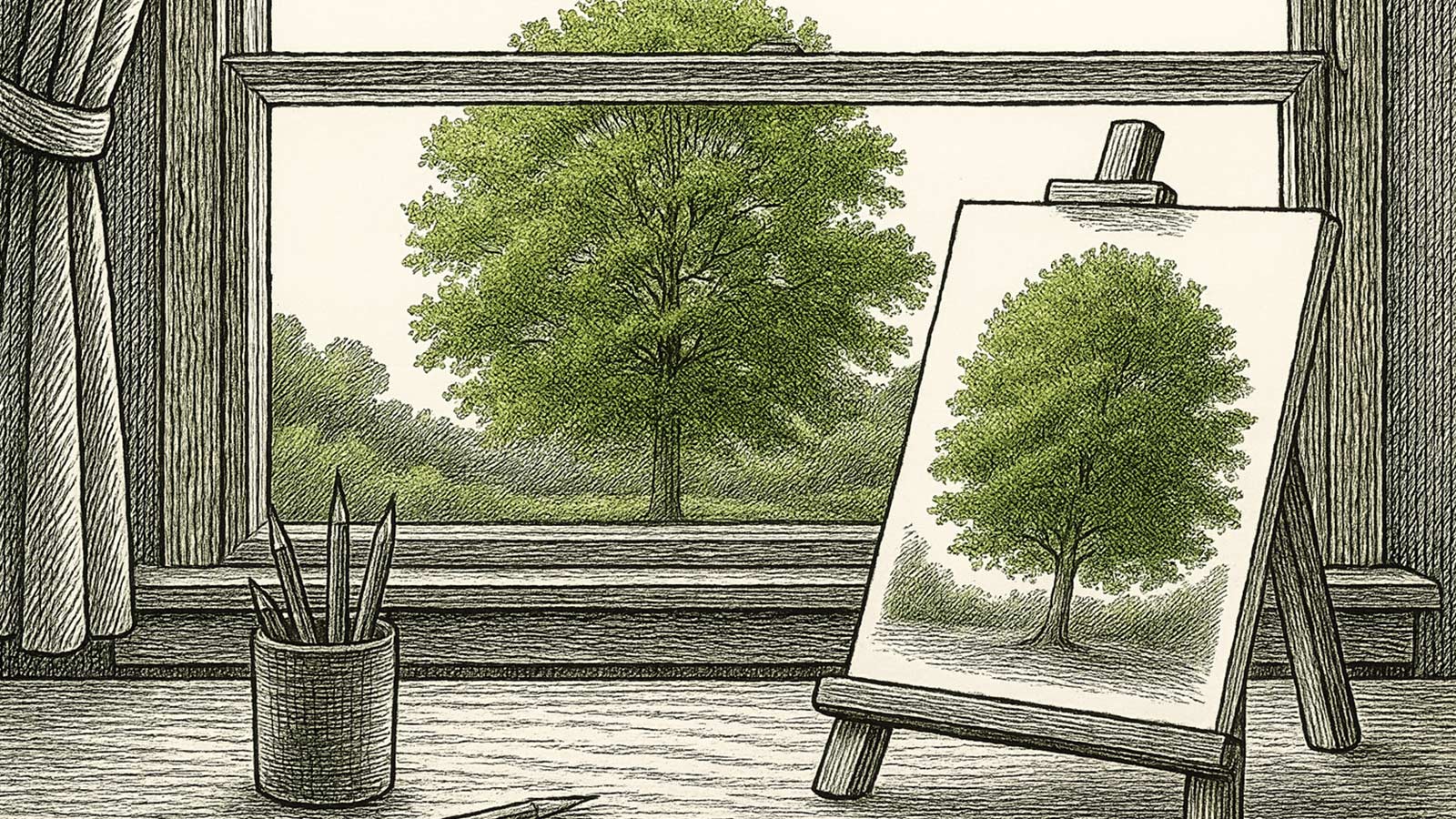
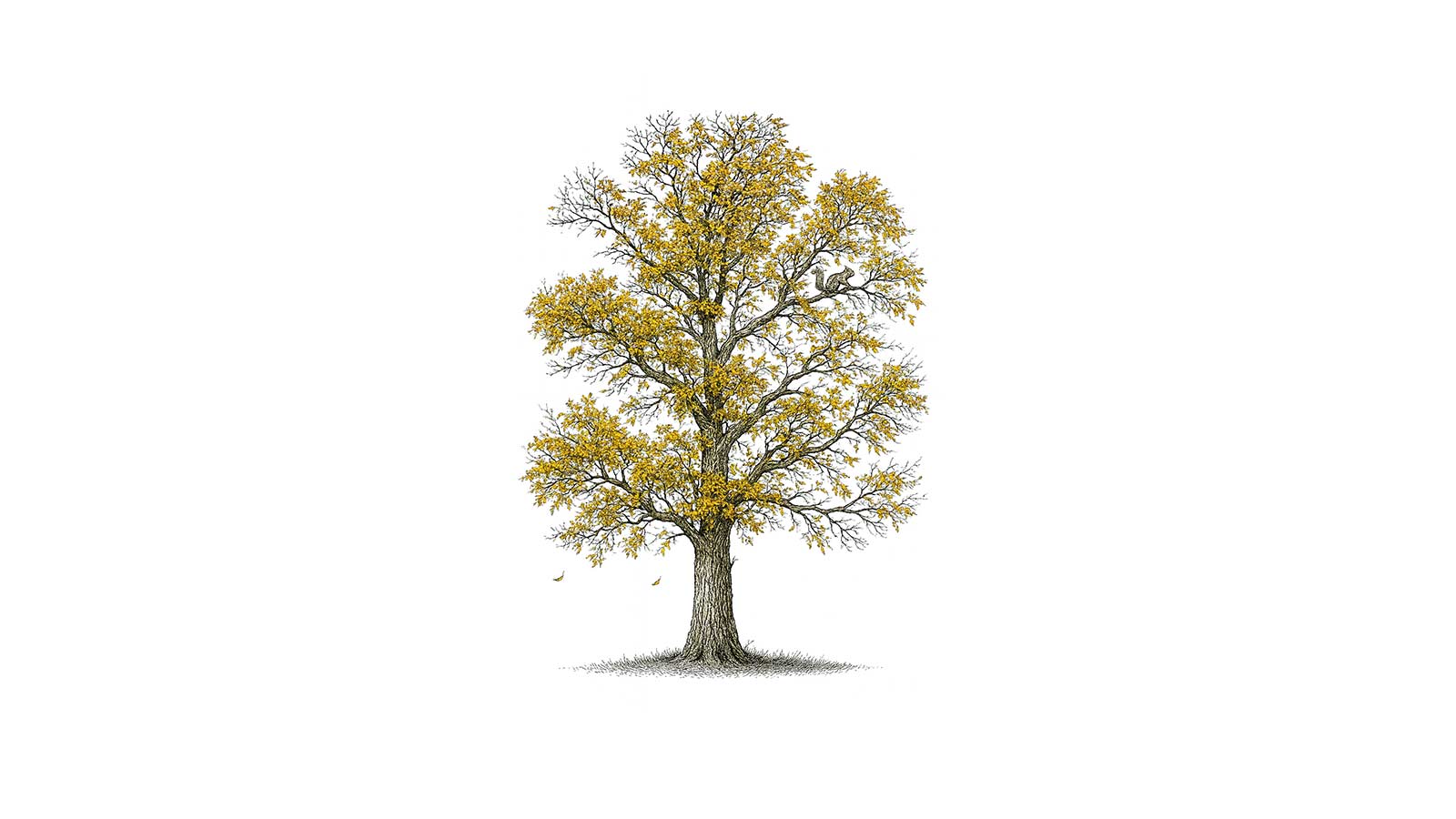
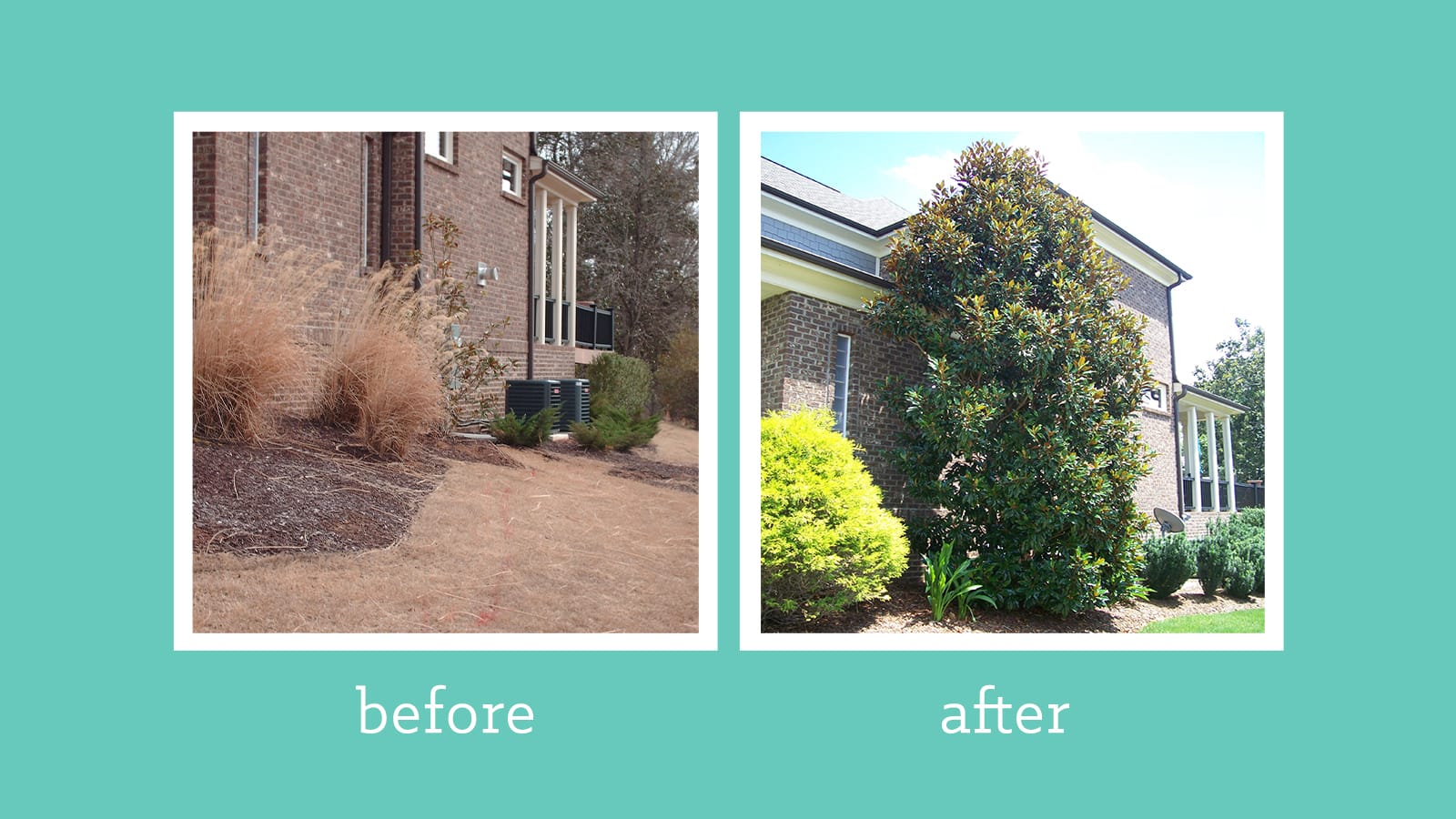
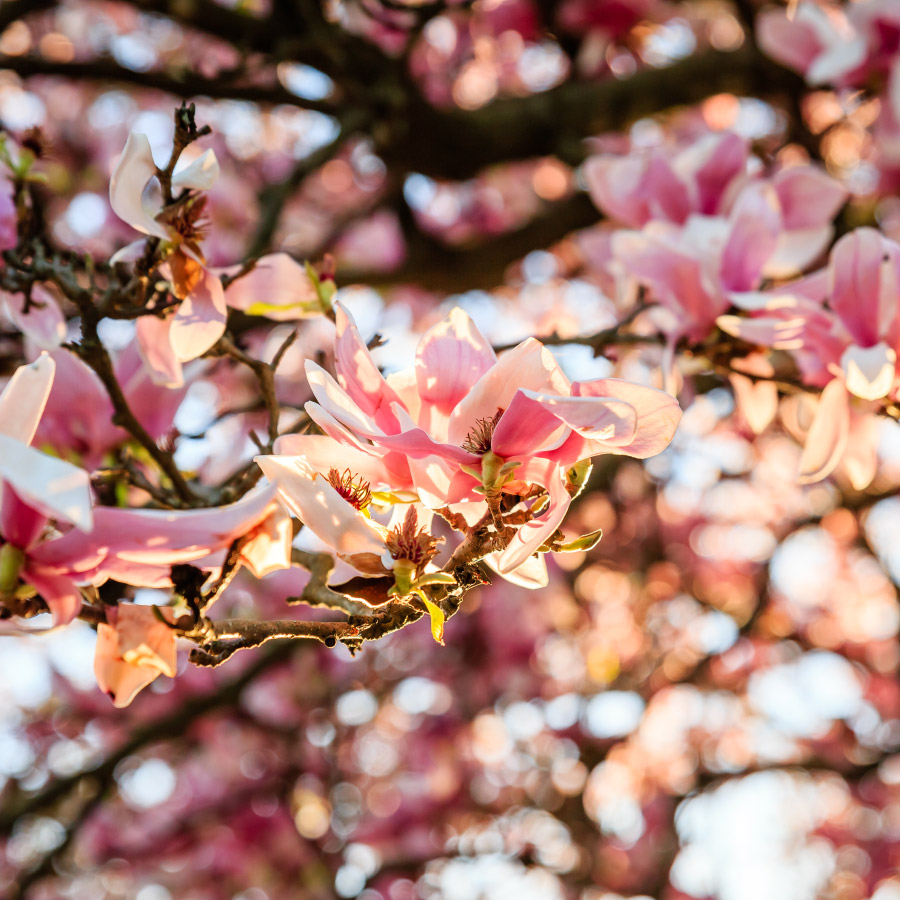
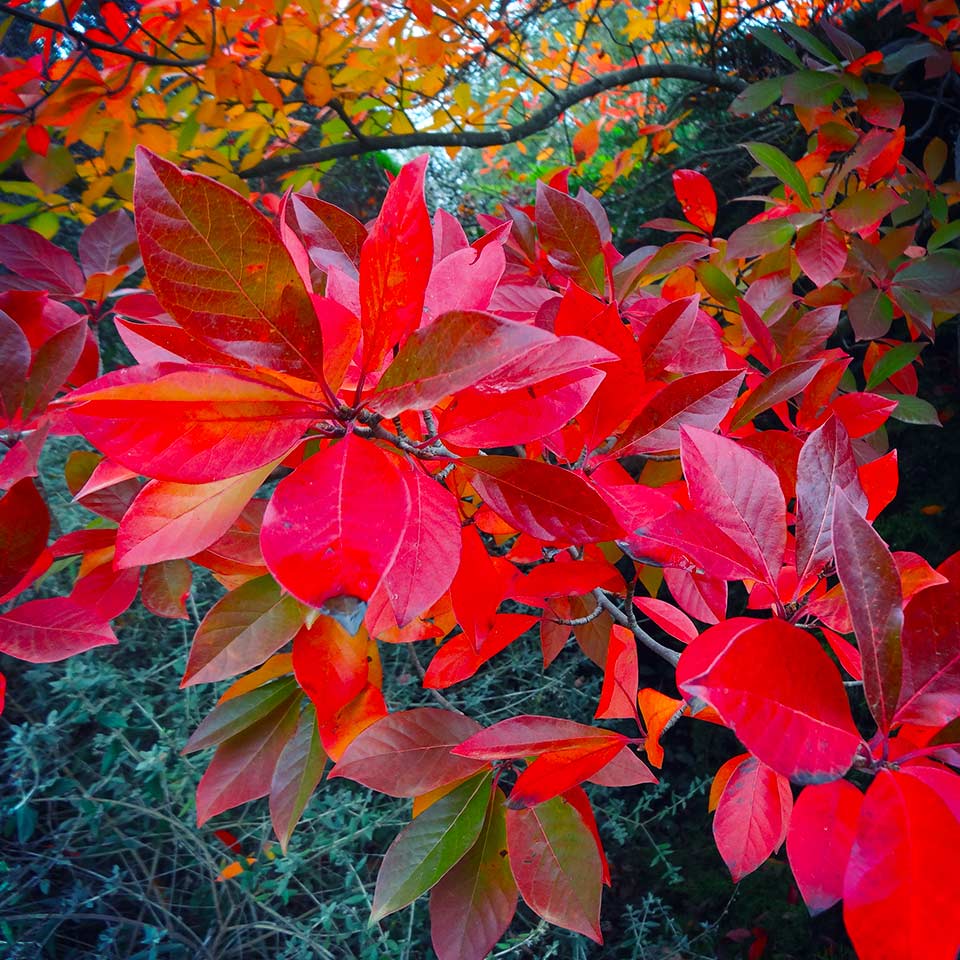
Or maybe a feature tree you can see in all seasons from a favorite window is more what you're thinking of; a tree that reminds you of someone or something important. Could an iconic southern magnolia be that tree? Or maybe a black gum that glows red in early Fall. Black gum is a favorite of several of our Treecologists. It's big enough to be an important shade tree for a medium-sized yard, and the fruit is right on time to help migrating songbirds make their Winter journey.
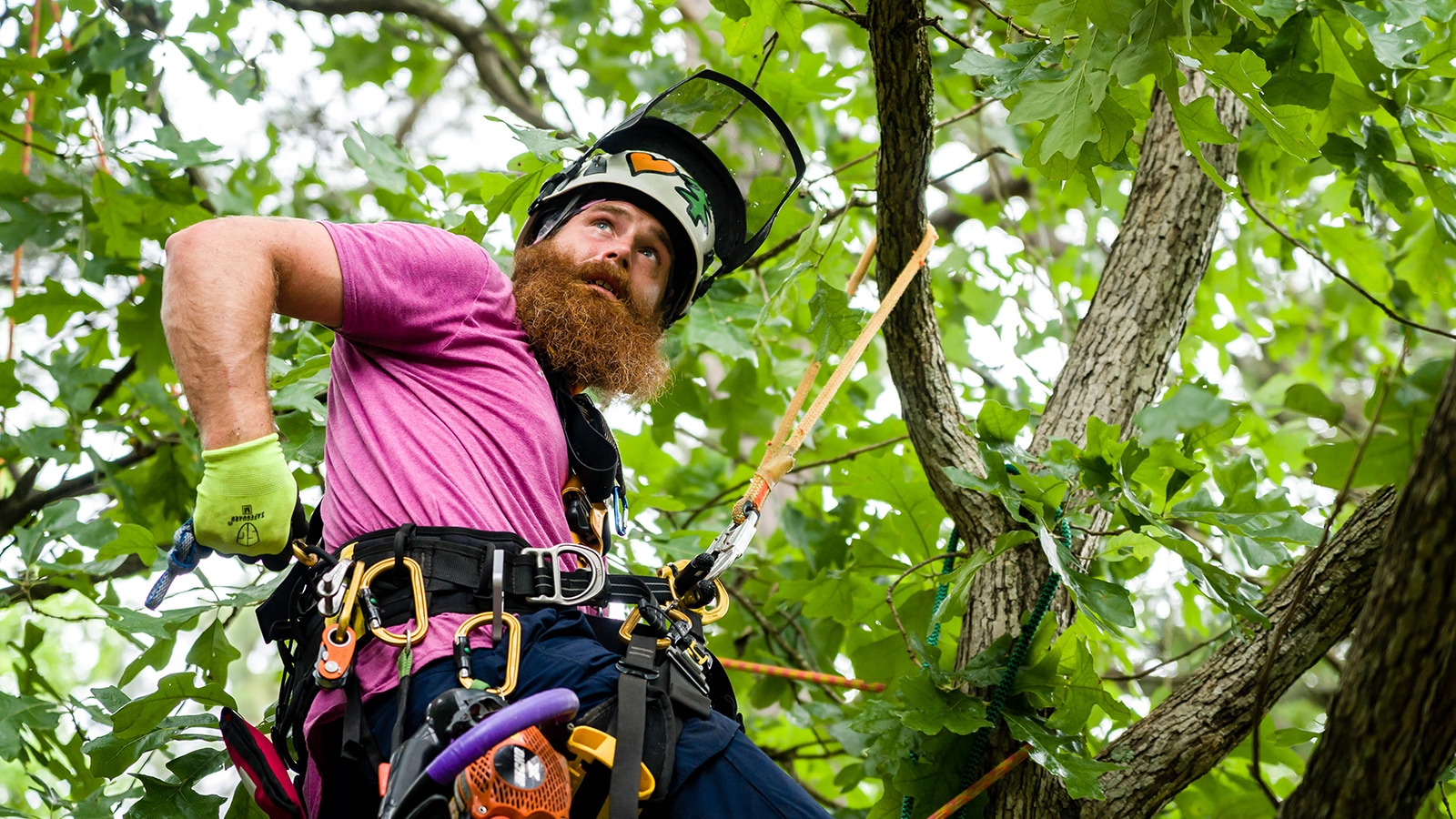
Some people also want a tree that will hold up as our summers get hotter and drier. That is a fair thing to ask, and it is part of what our Treecologists weigh when they walk your yard with you. Certain oaks and hickories thrive in the driest, poorest sites, which makes them good bets for the decades ahead.
Choosing the Right Tree
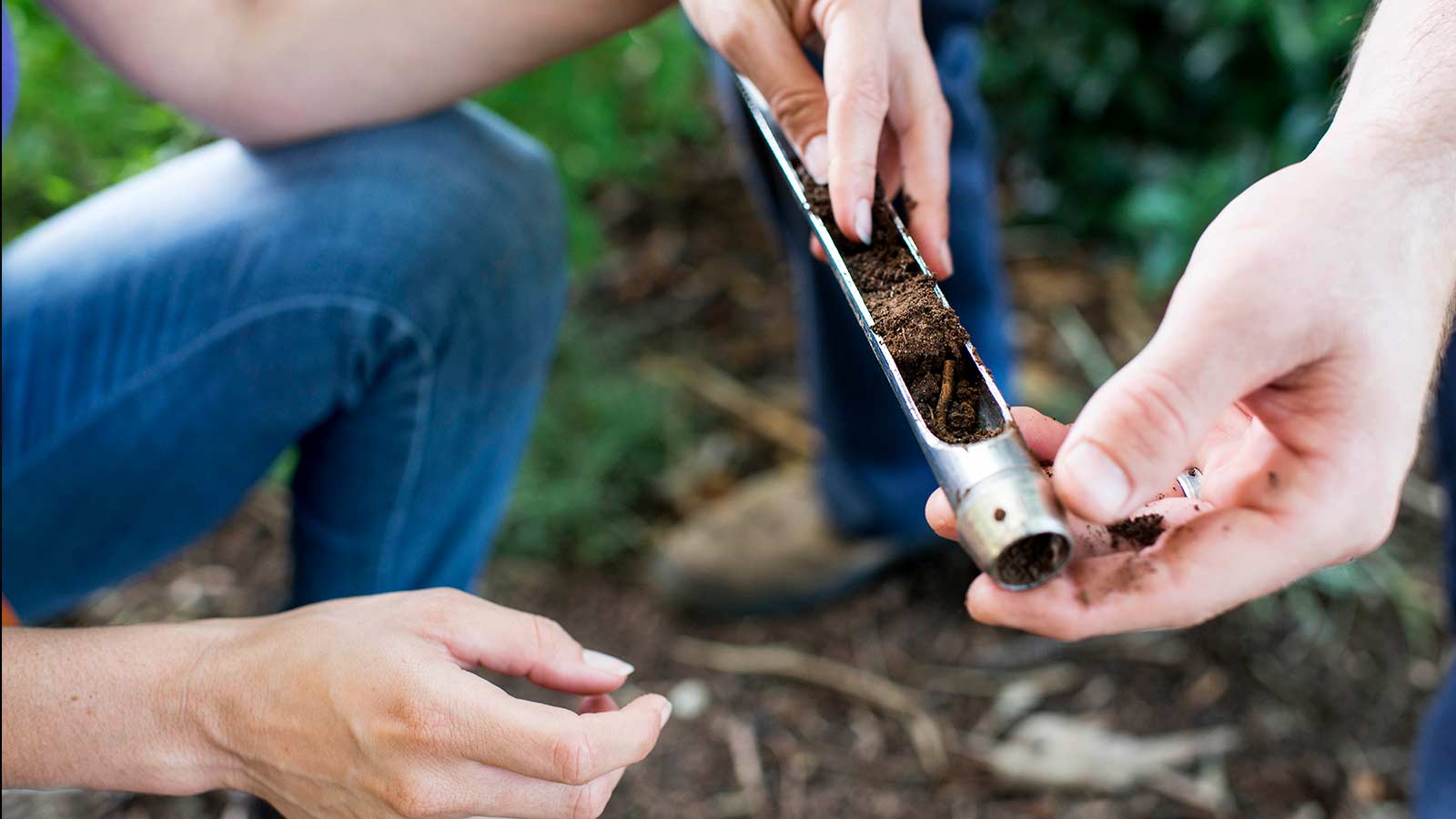
You have a vision, but there are still so many choices. You know that your yard conditions, including the moisture and sunlight your site receives, along with the physical space to hold a mature canopy and root system, matter. You want a tree that can thrive in your yard. We can help you choose the right one.
We are blessed with abundant diversity of large native shade trees and small understory trees here on the Piedmont. You can start with our list of the native trees that we can source. We've worked with these species for years and know they do well in our Piedmont clays and growing conditions.
Roots Go Wide, Not Deep
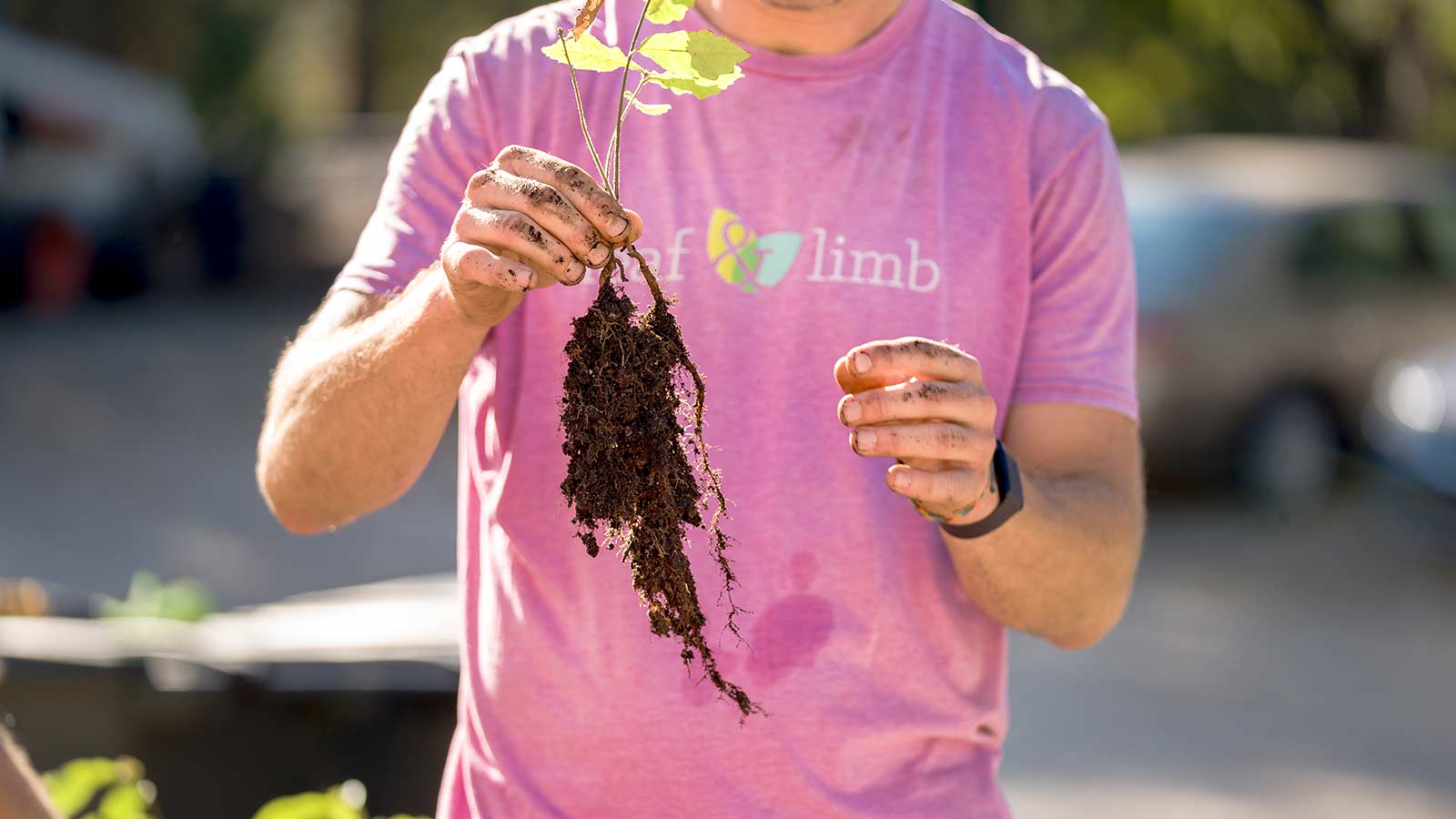
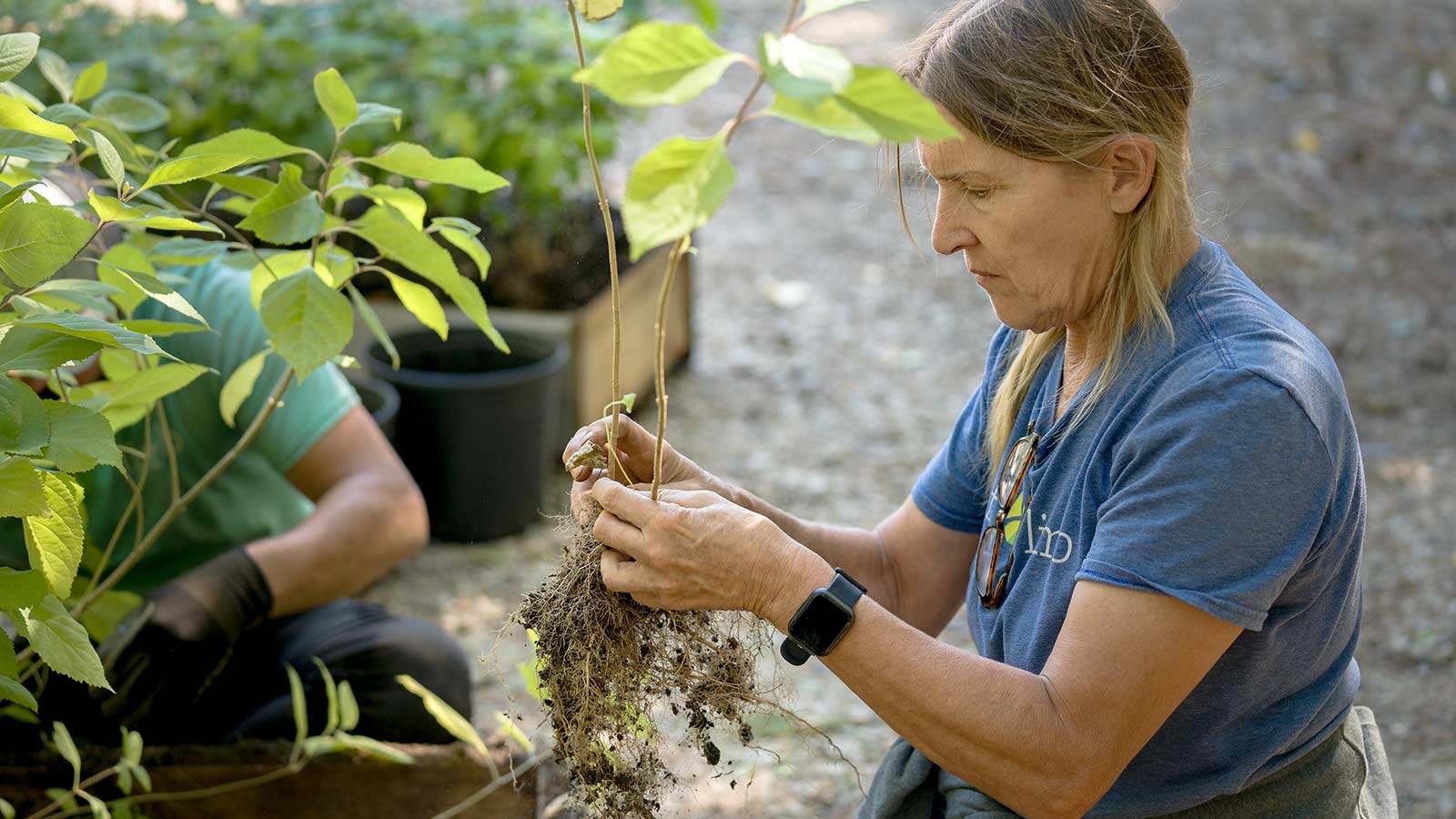
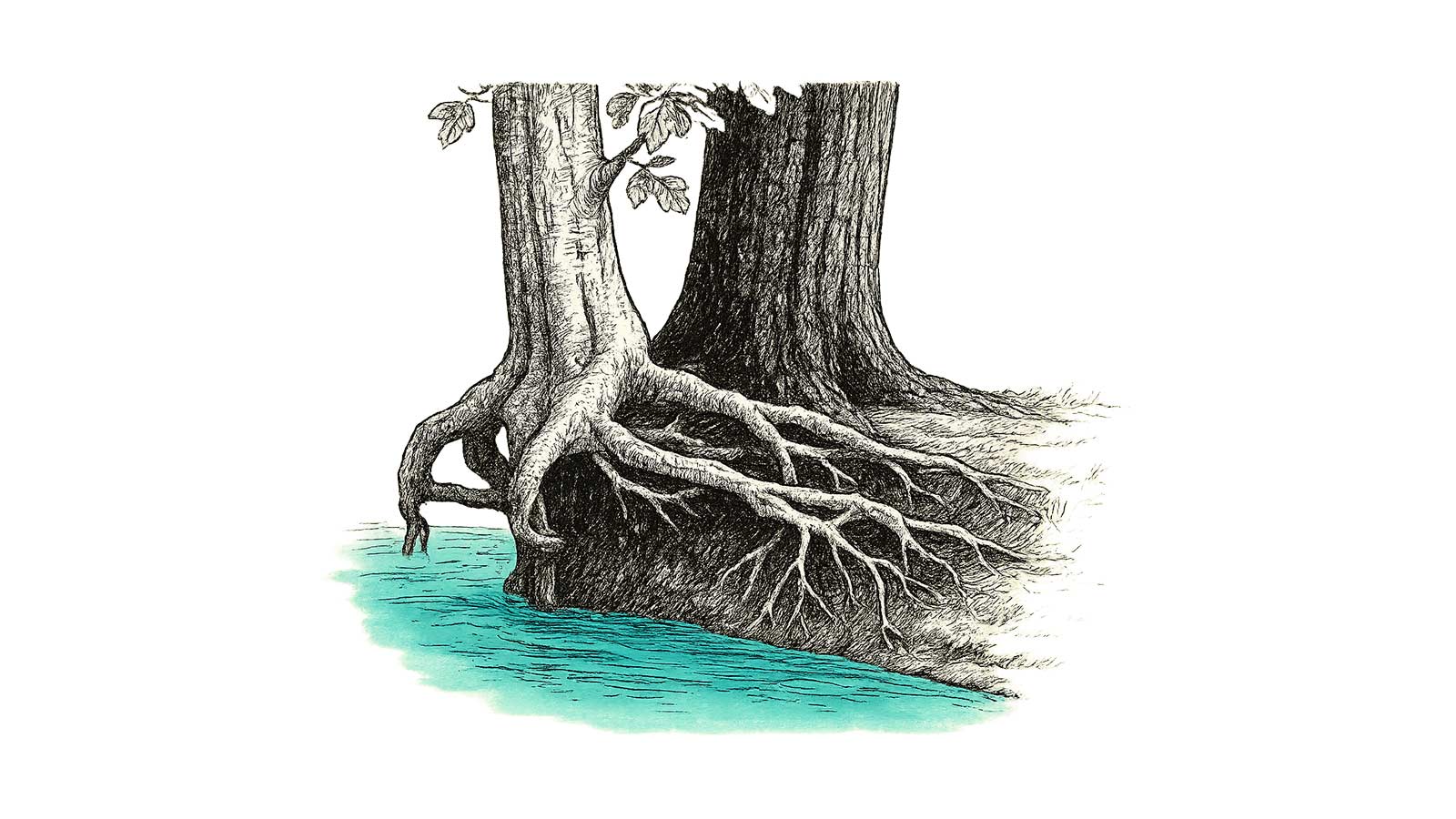
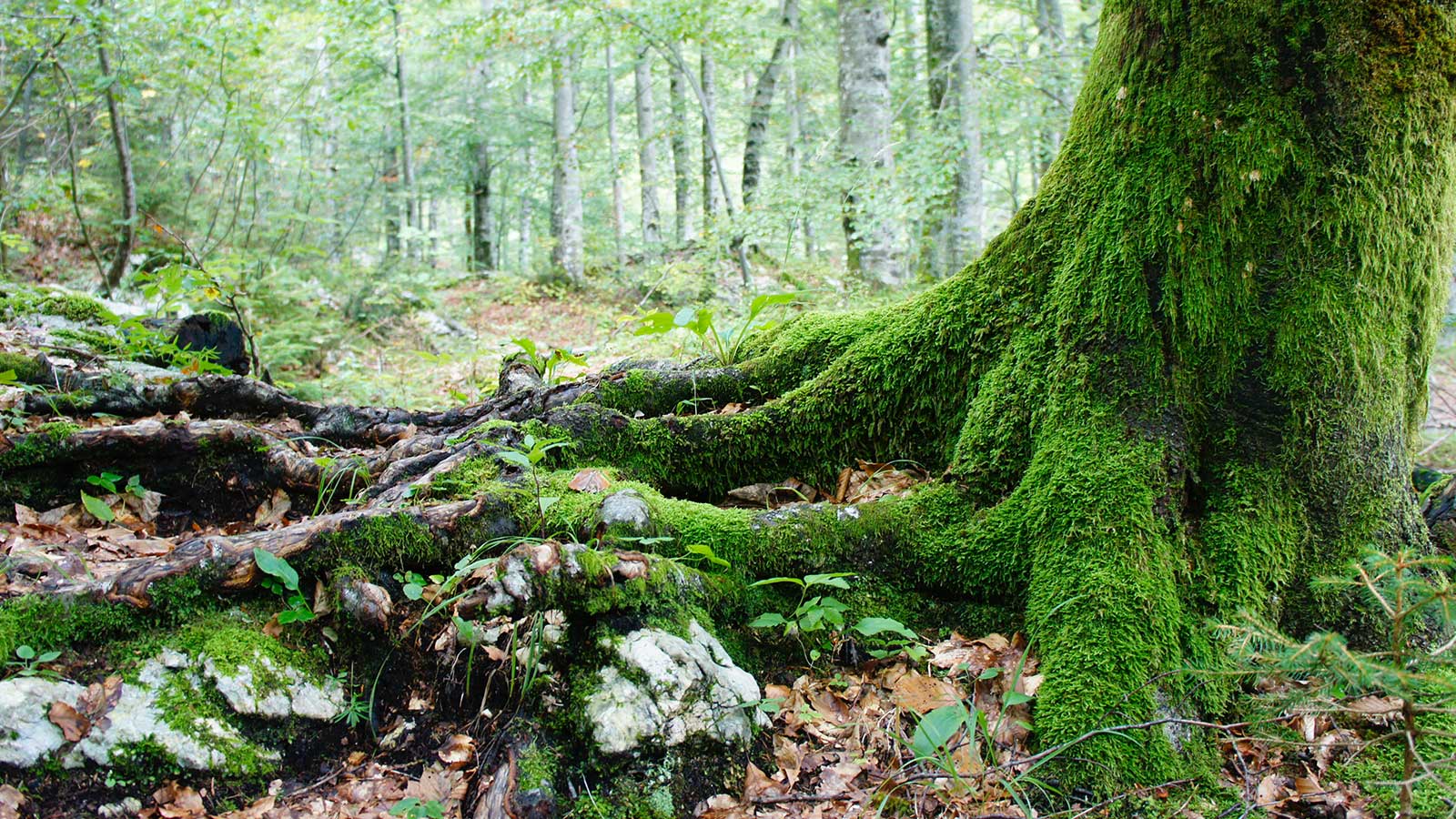
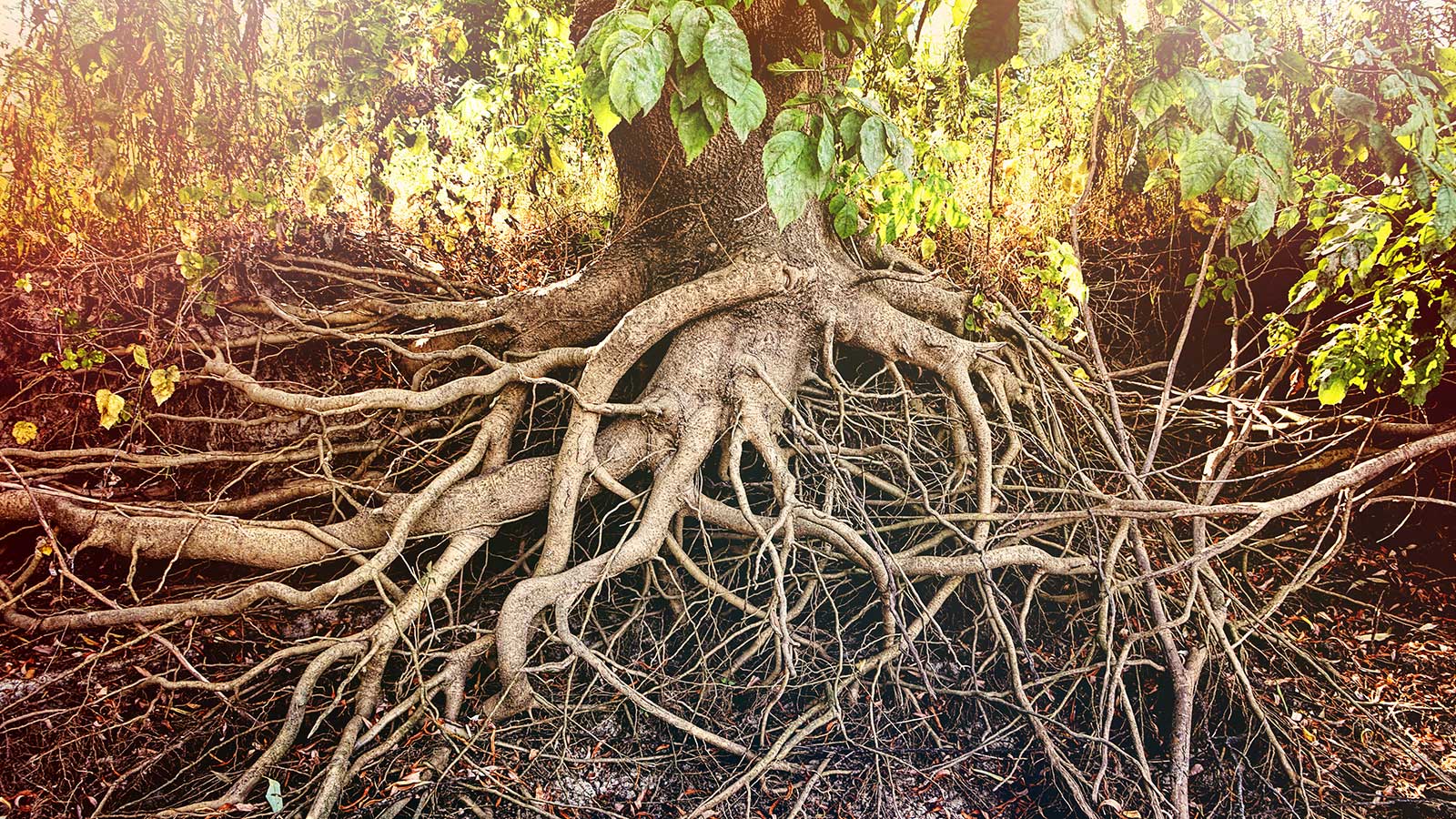
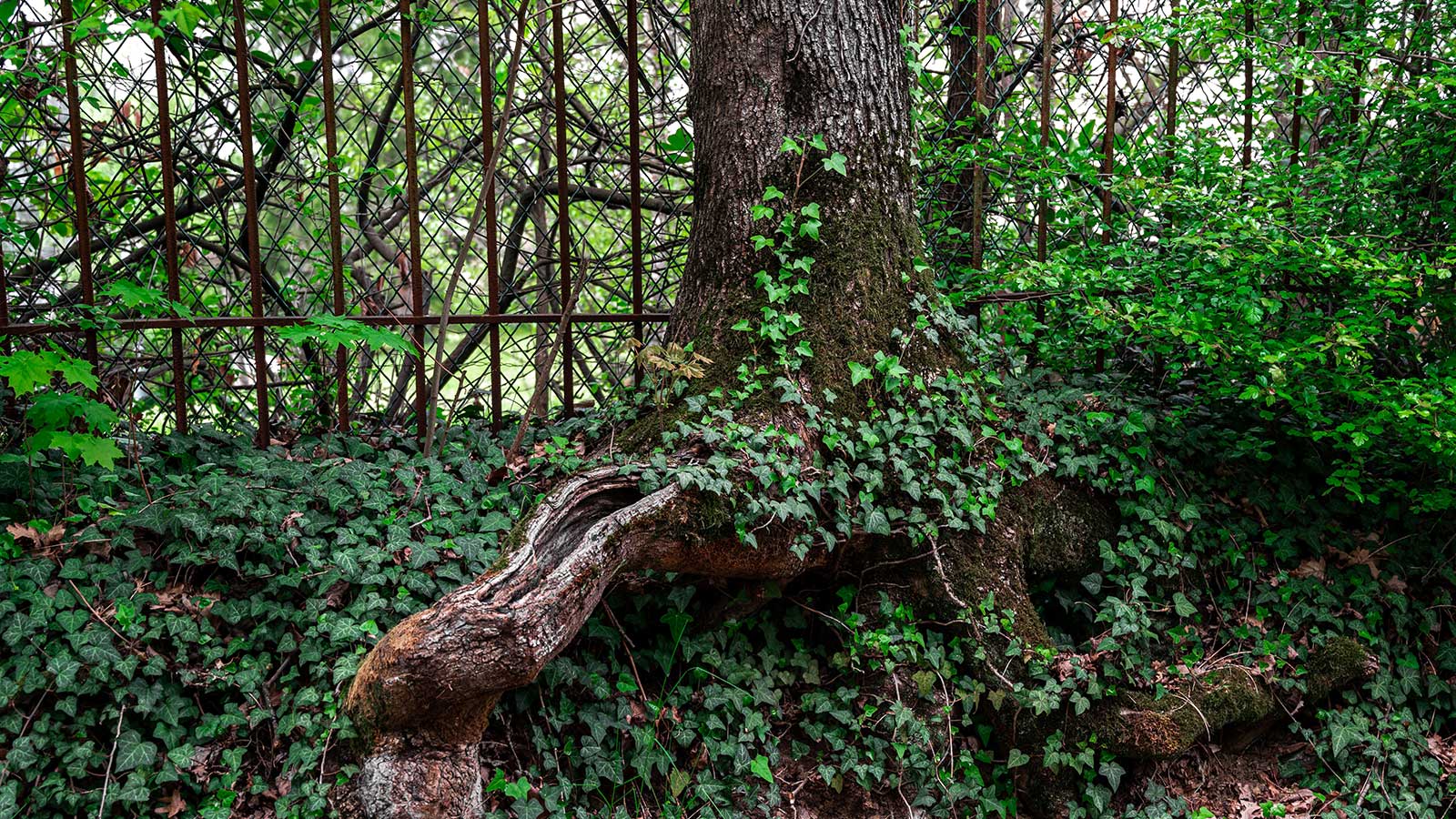
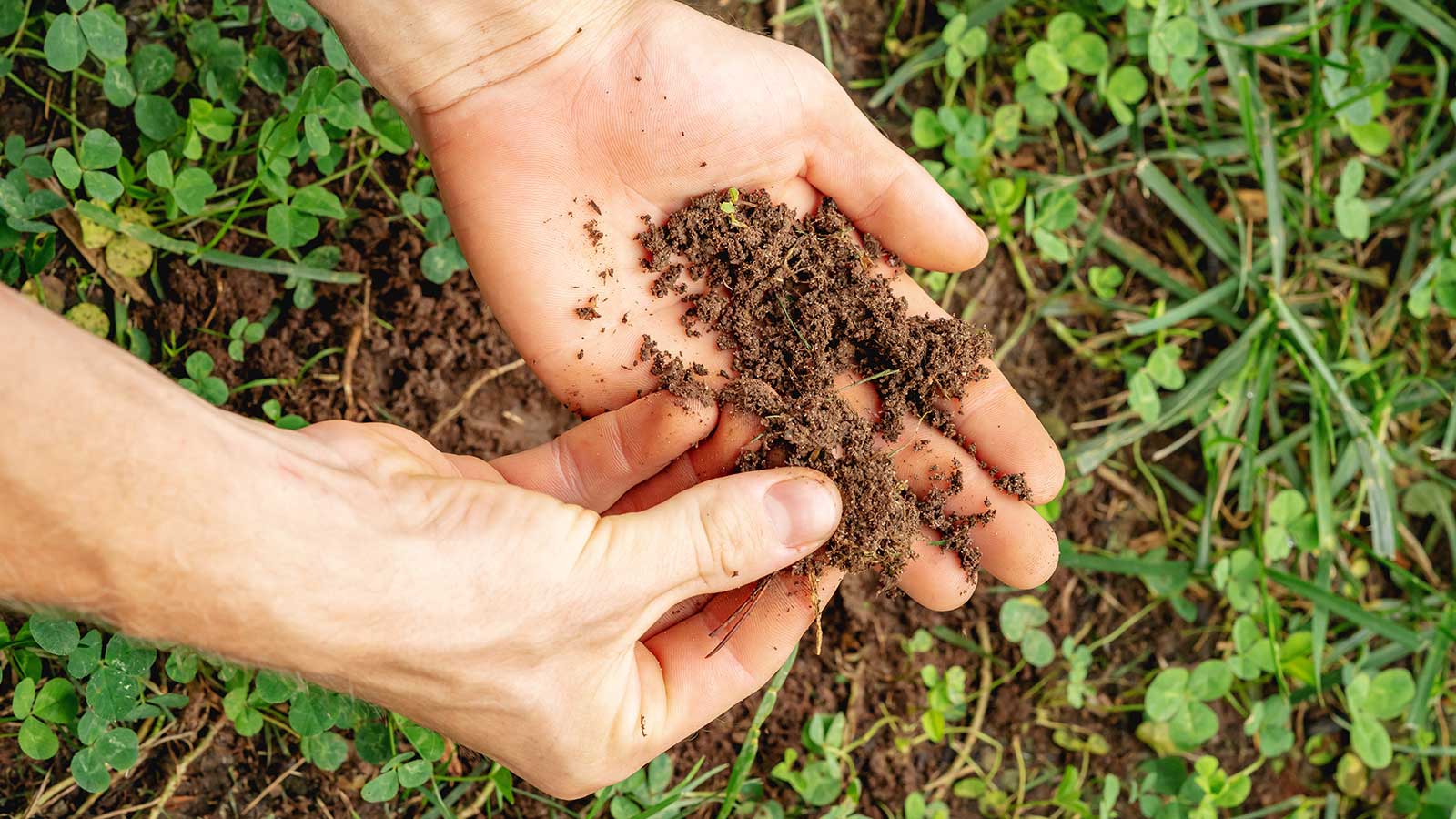
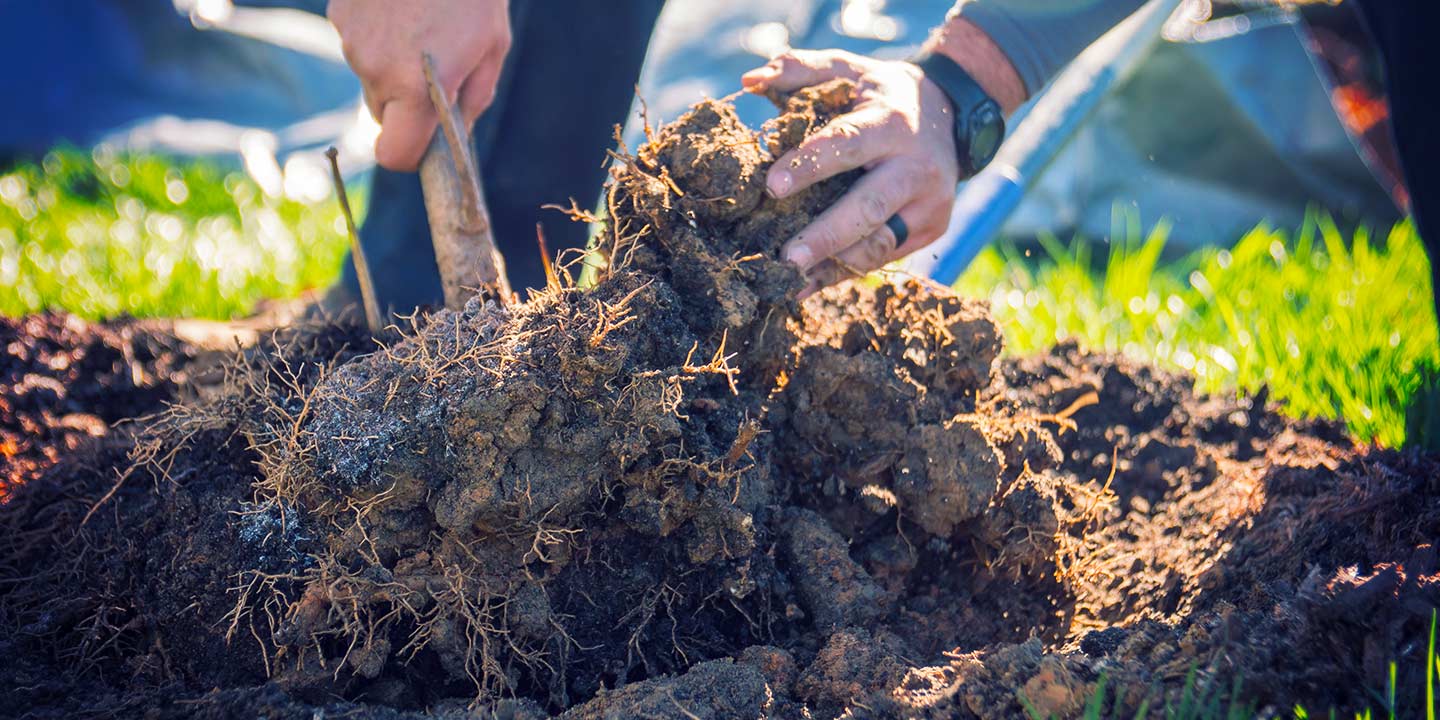
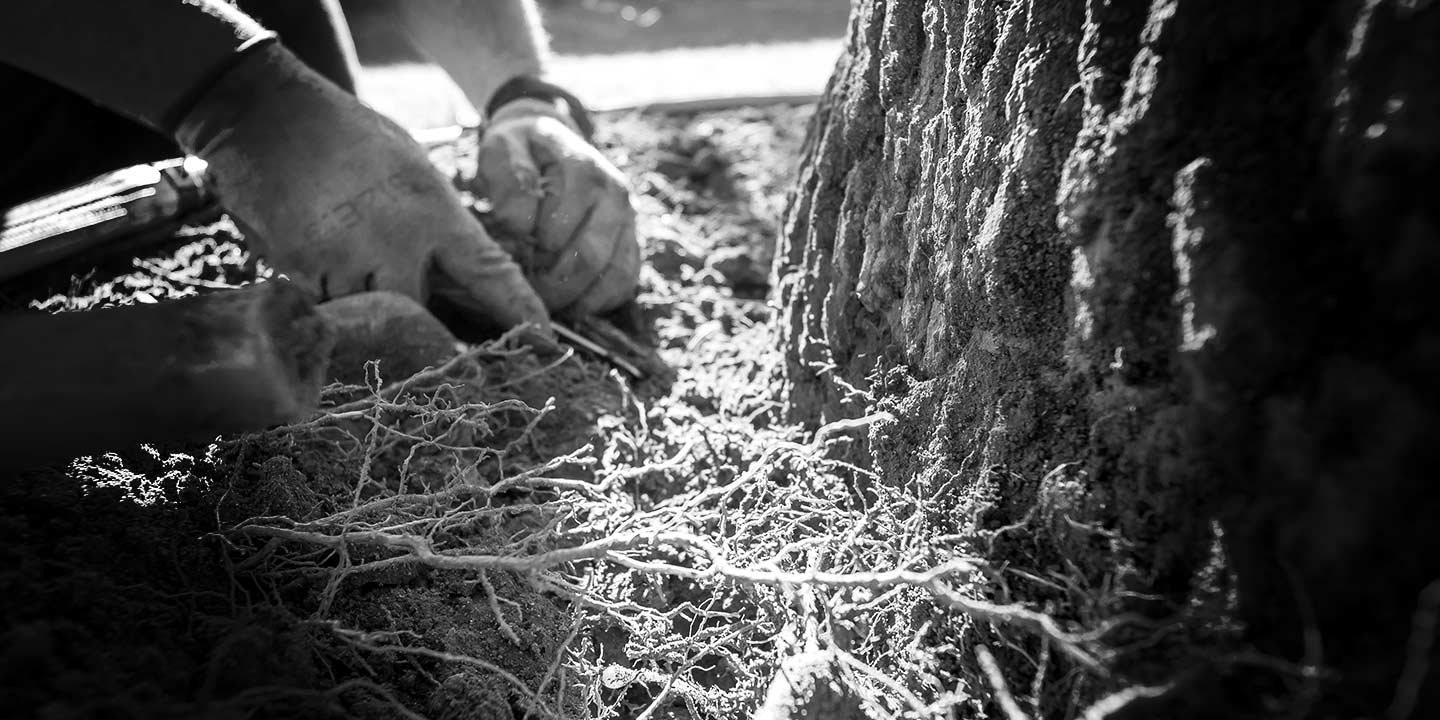
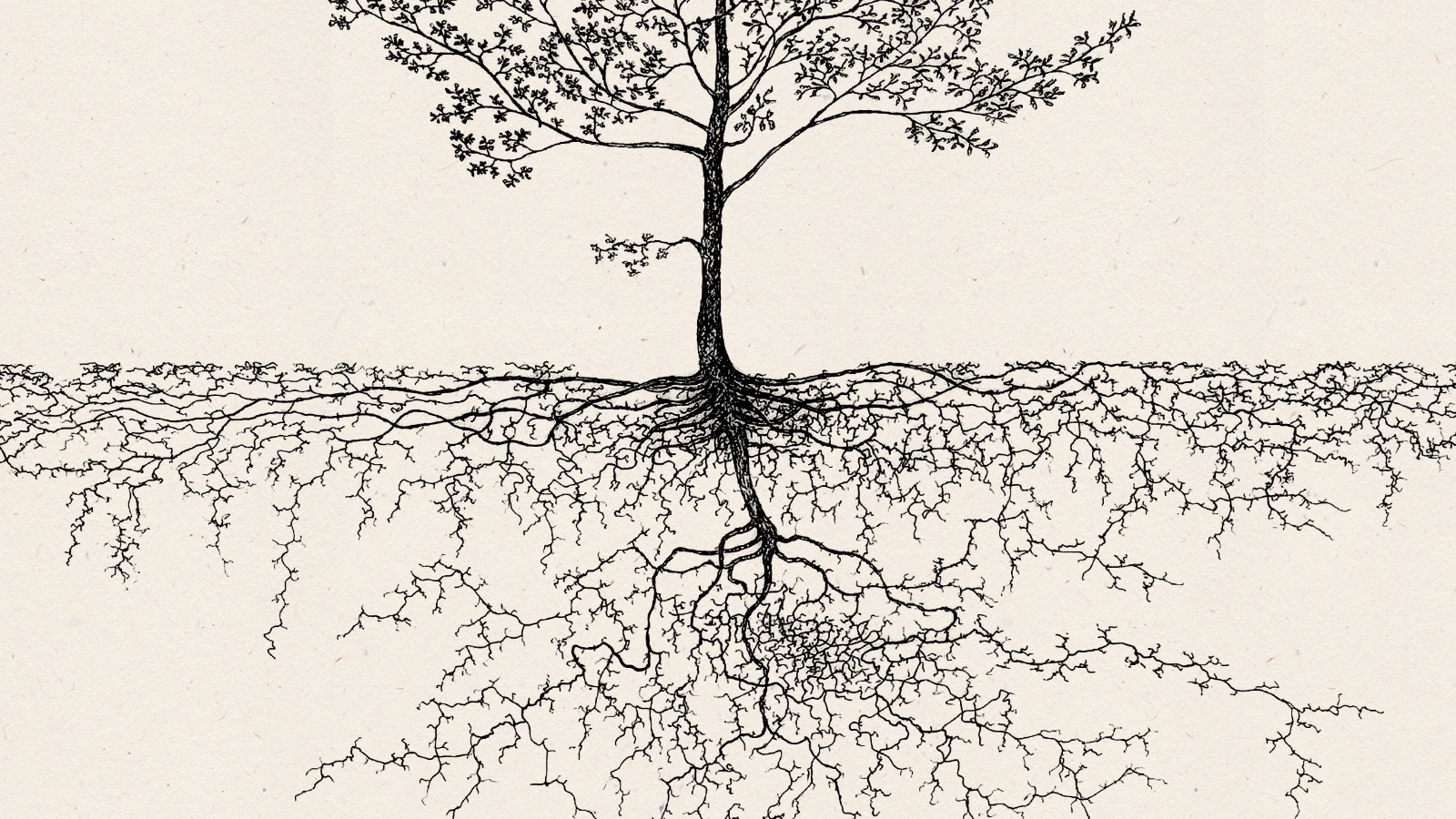
Remember that roots don't go deep; they go wide. Roots rarely reach deeper than two or three feet into the soil, but they typically spread two to three times the width of the mature canopy, and not always evenly in all directions. Roots also carry about half the total mass of the tree, even though they're shallow. So, it's important to know you have the space aboveground and belowground.
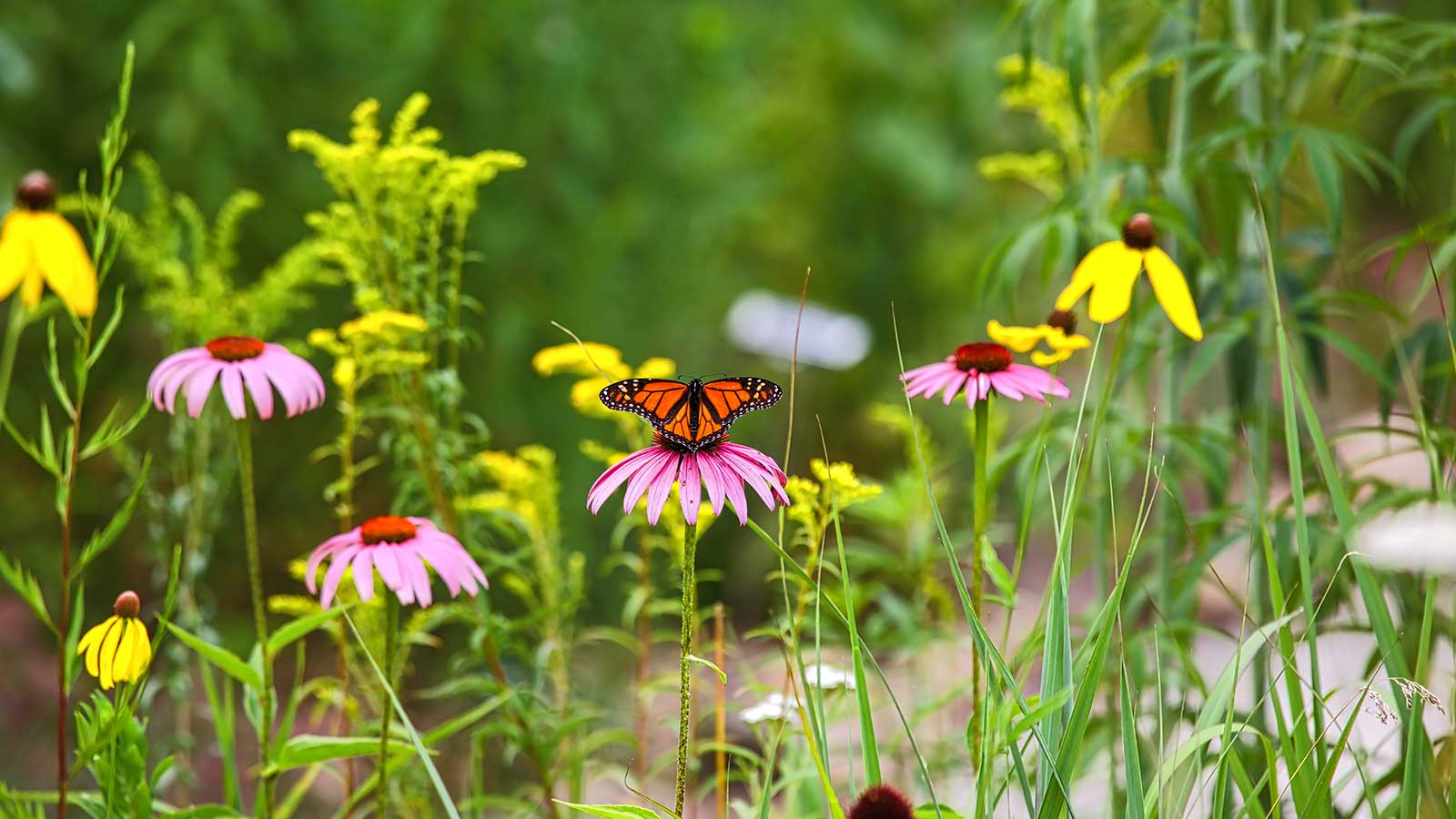
Whatever your goals or yard situation dictates, we can help you choose a big ol' oak that is right for your soil and growing conditions. Or maybe it's a hickory or a black gum instead. And if you want something smaller, we can help you pick a small tree that will be abuzz with bees and works with your sun exposure. Read about the top four questions we ask before we select a plant or pick up a shovel.
Planning for Success
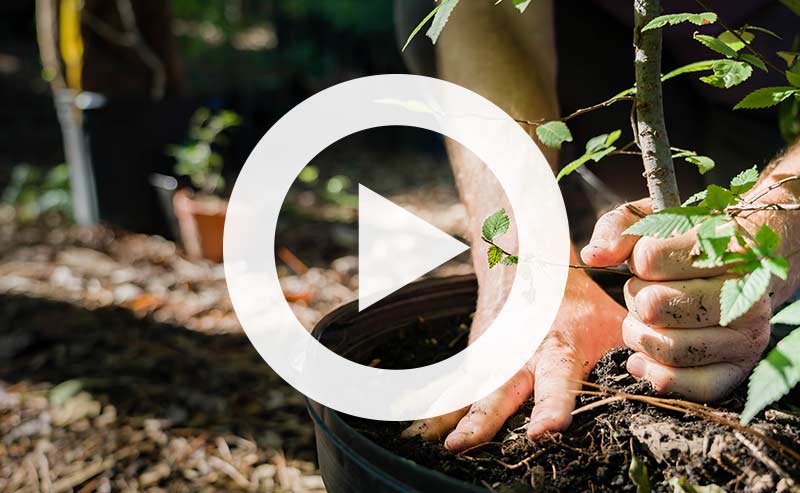
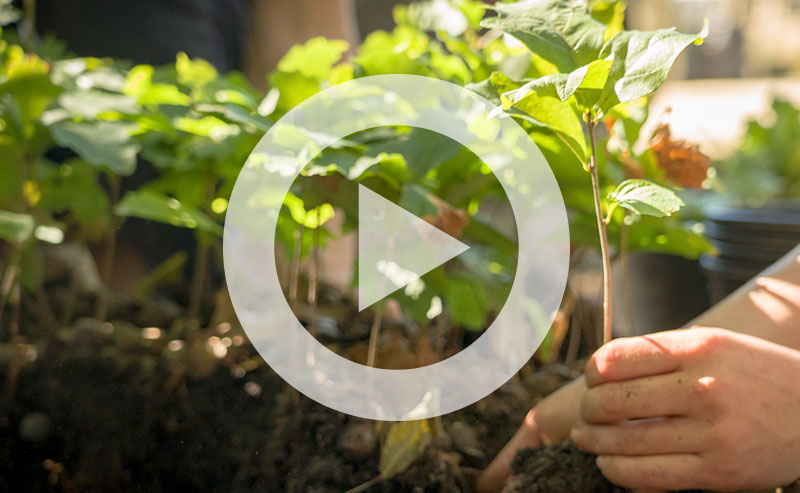
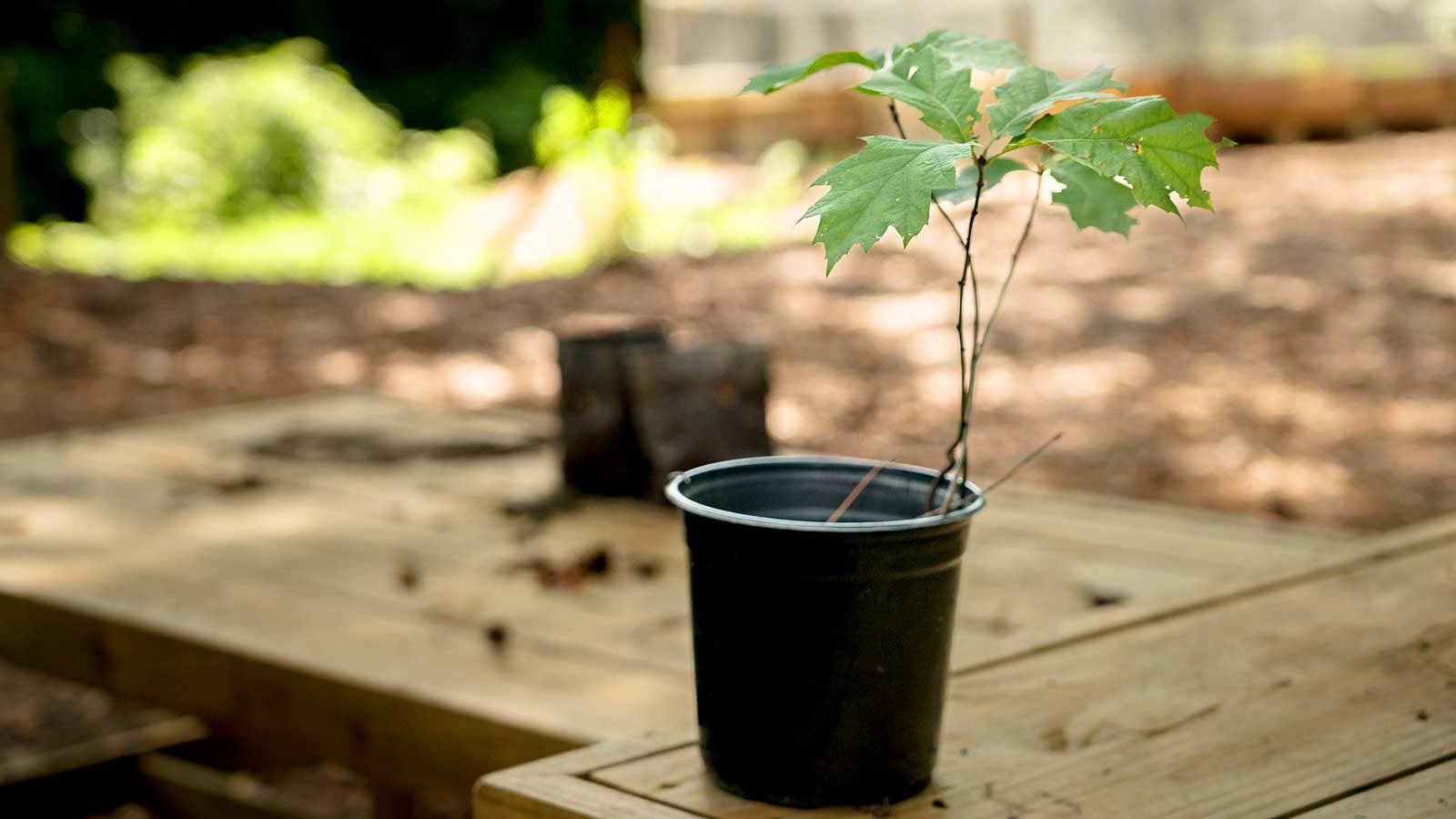
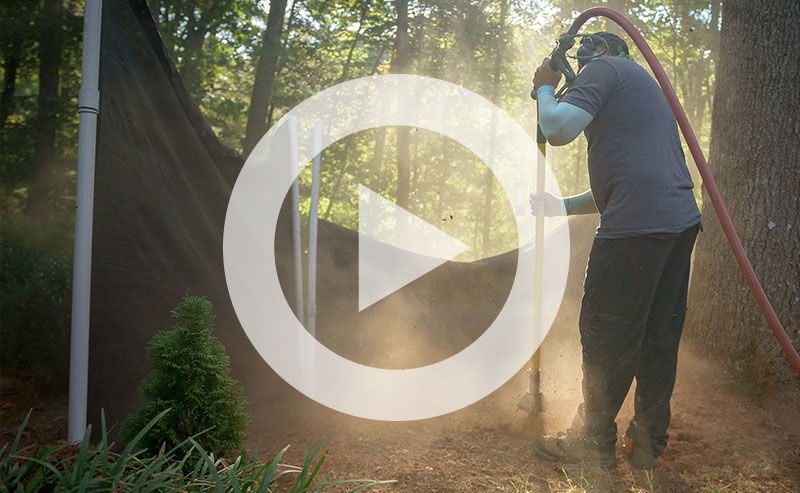
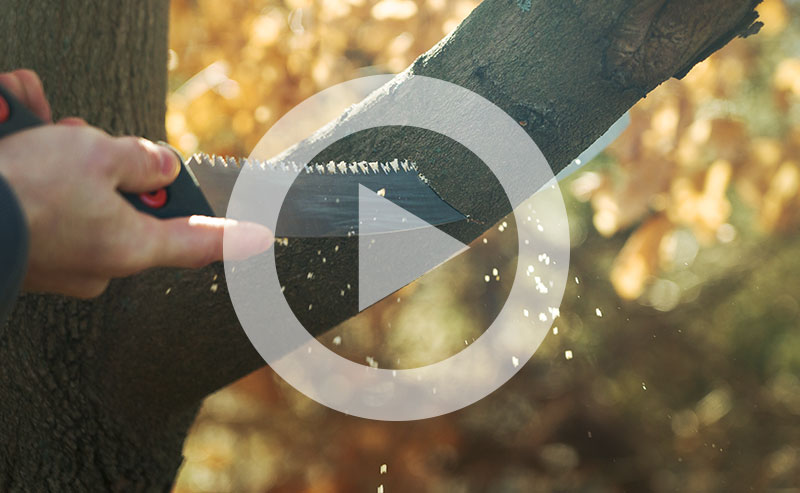
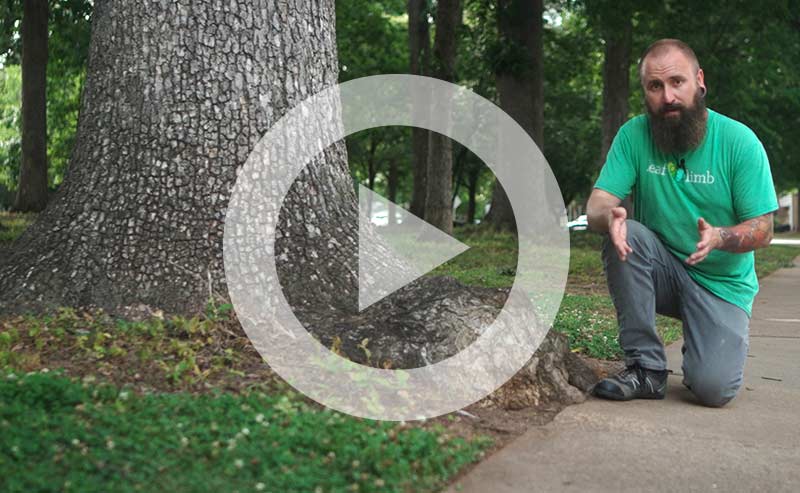
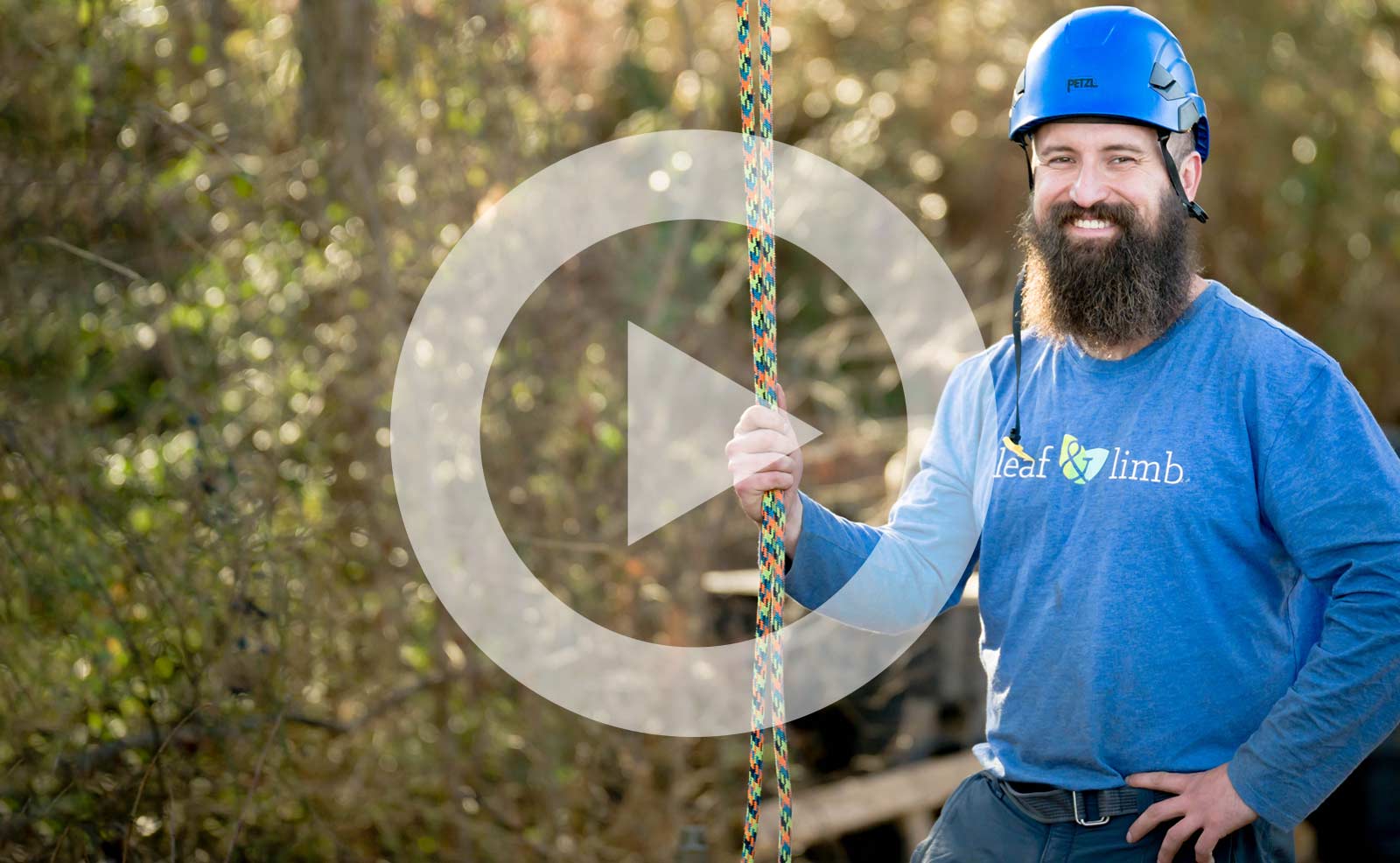
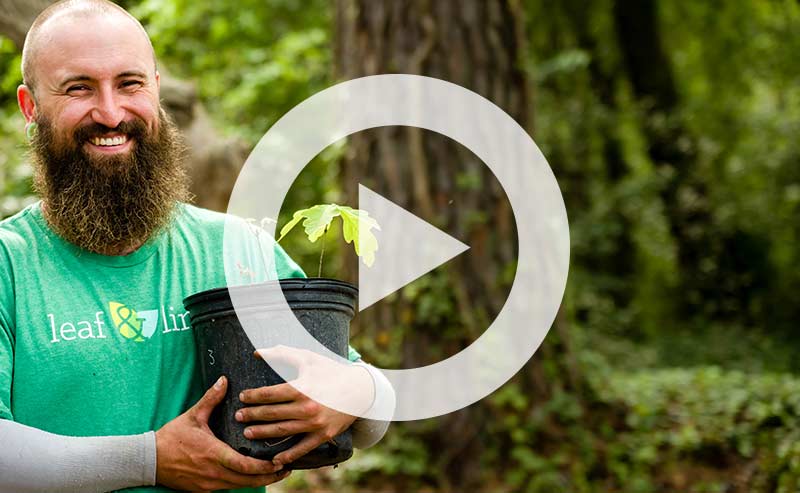
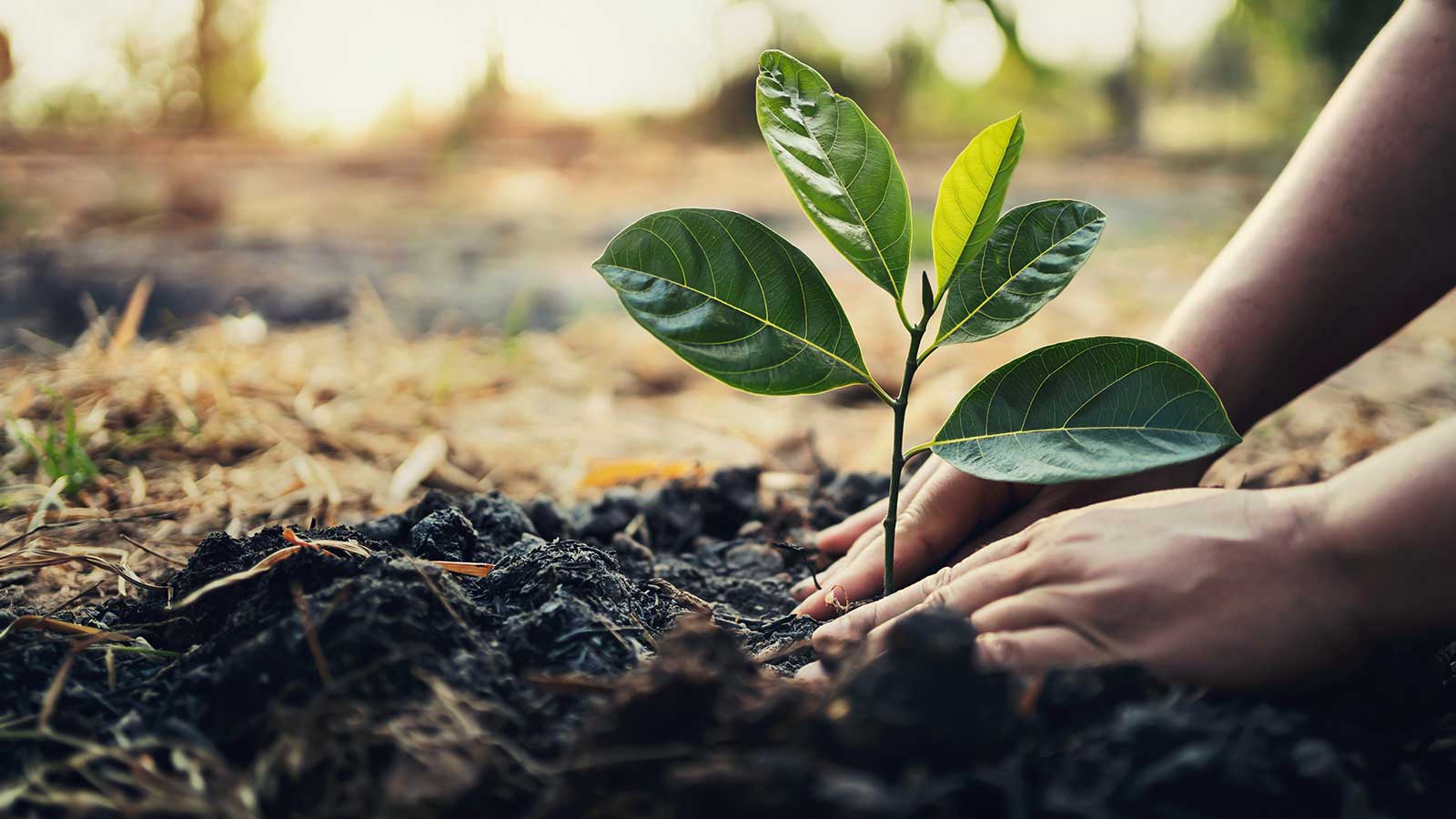
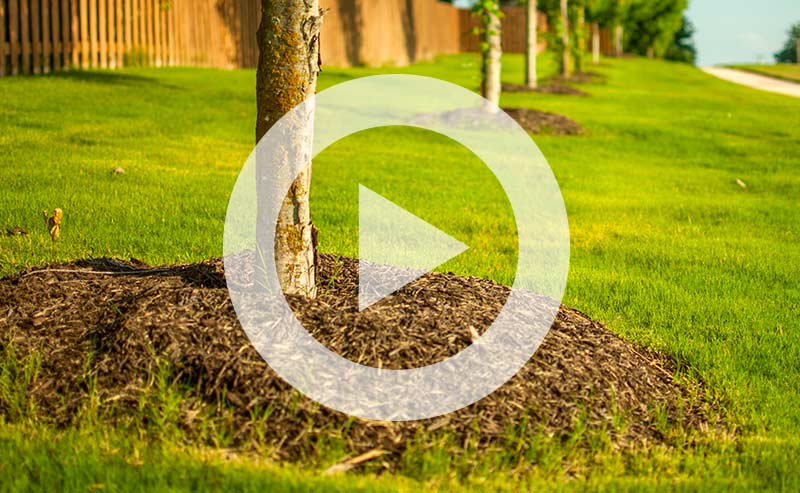
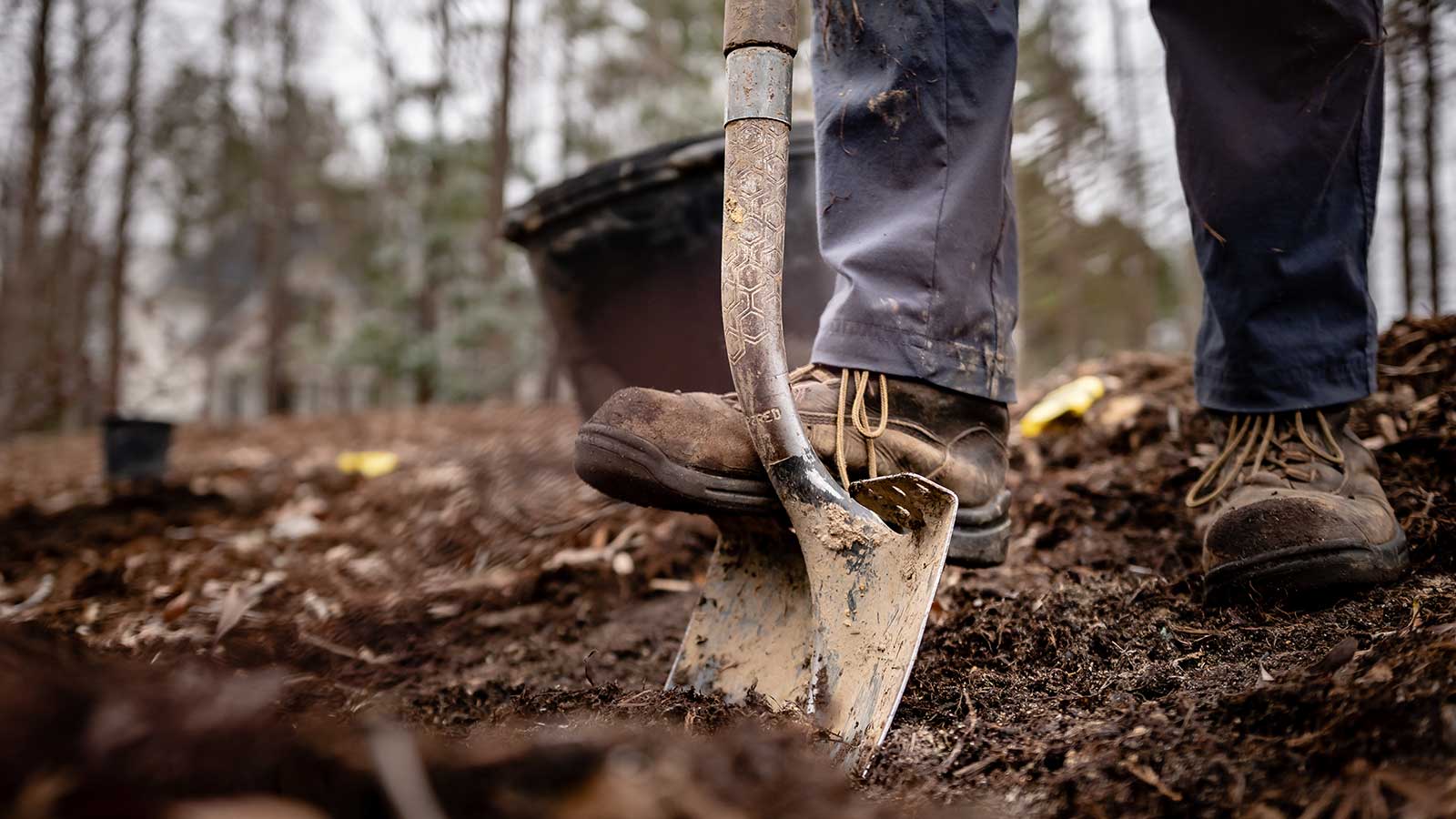
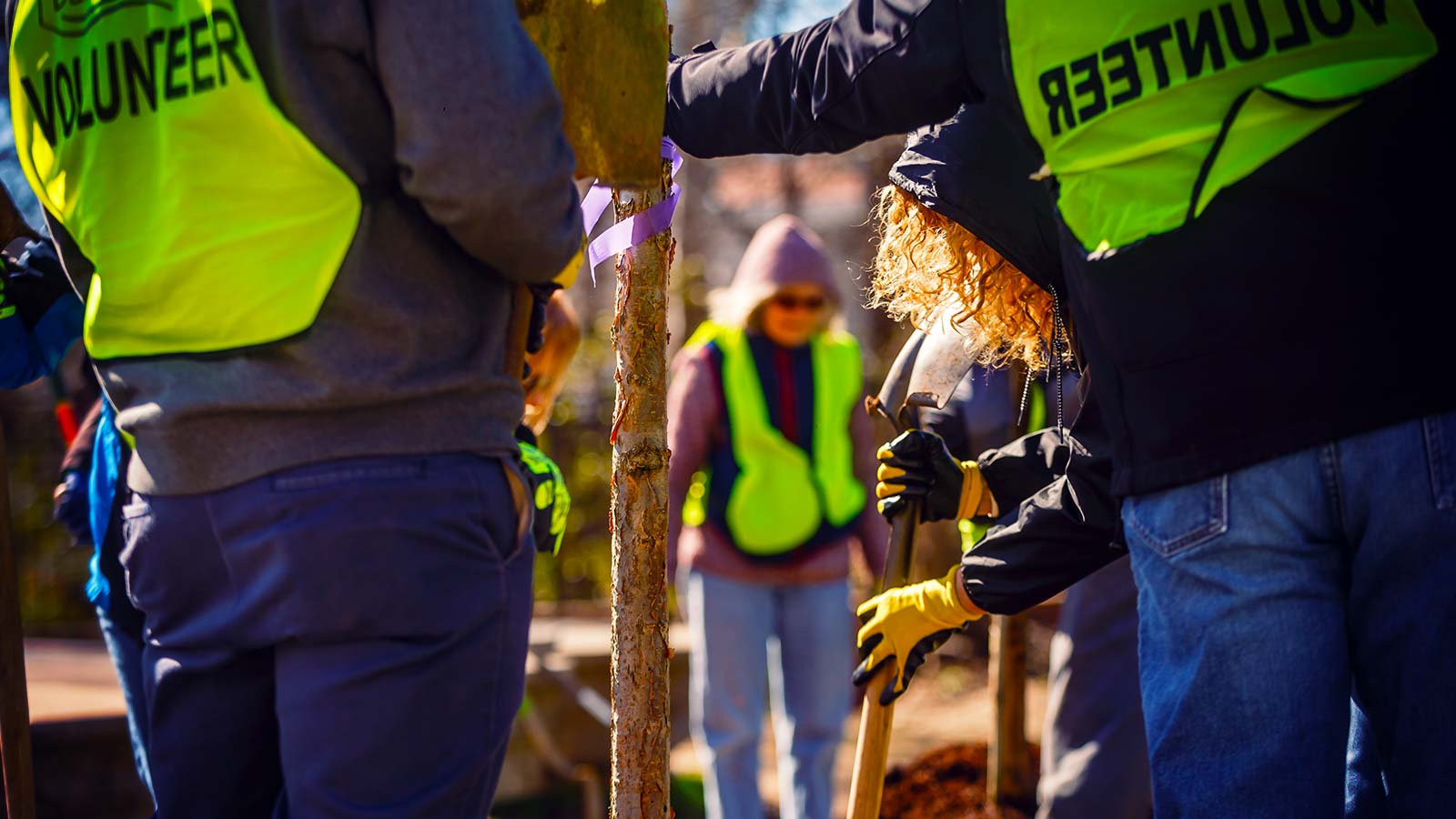
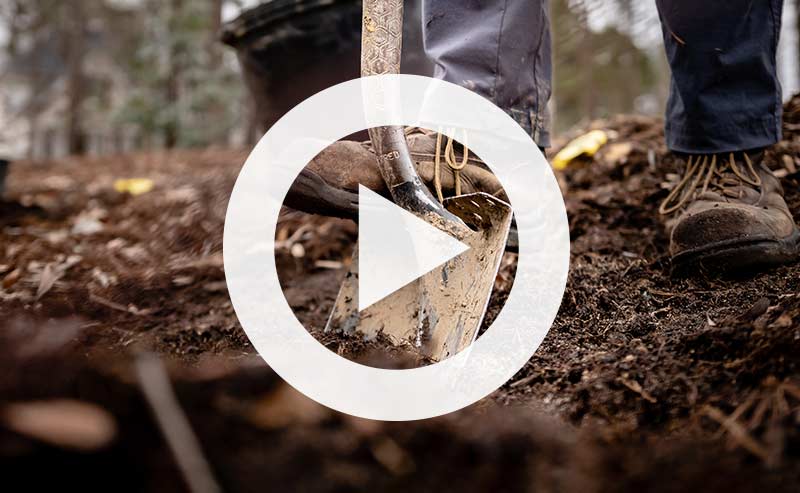
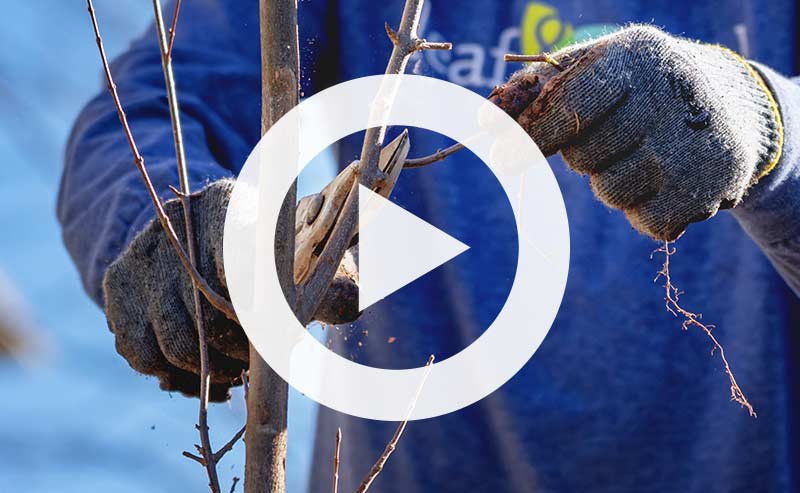
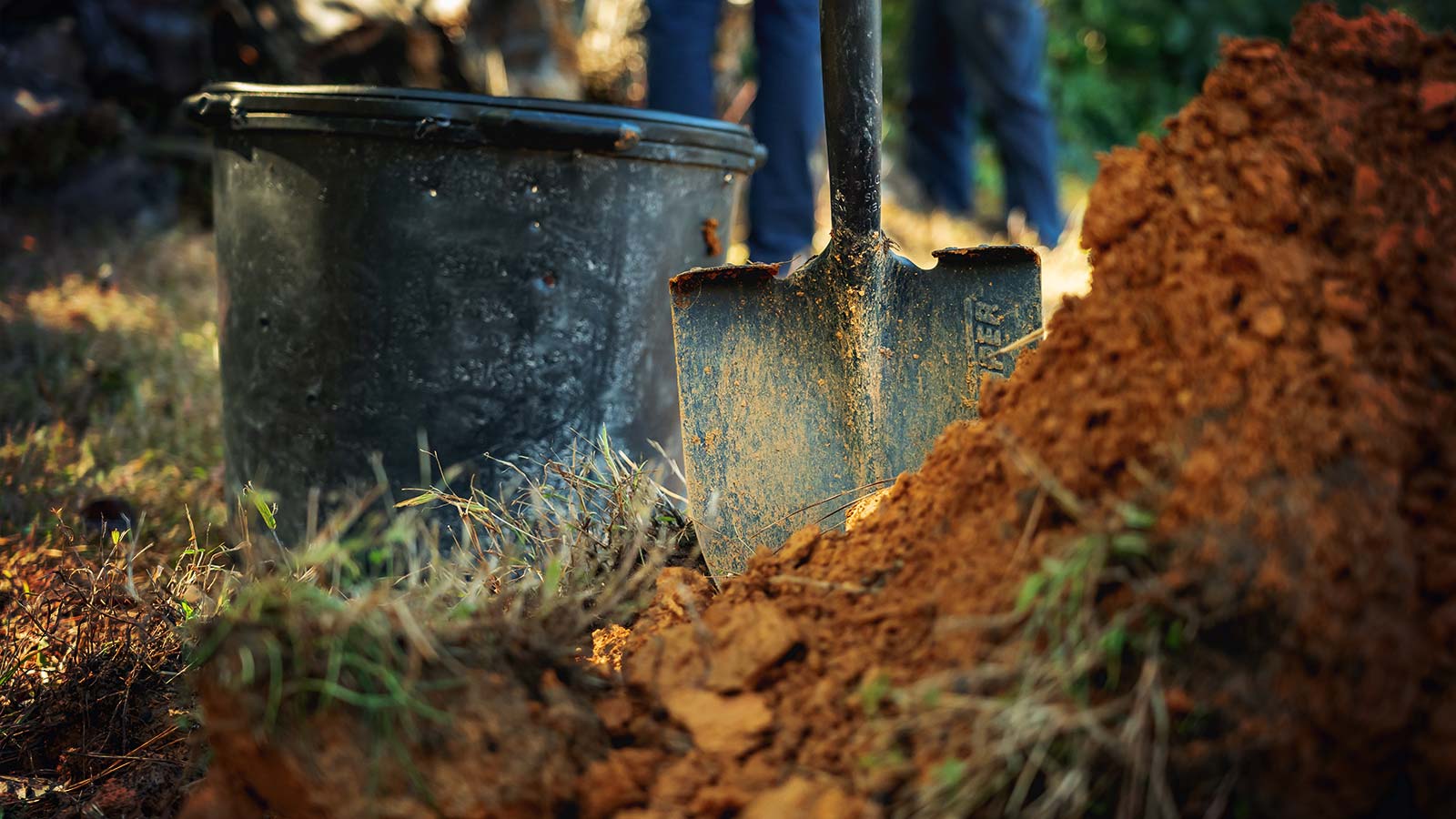
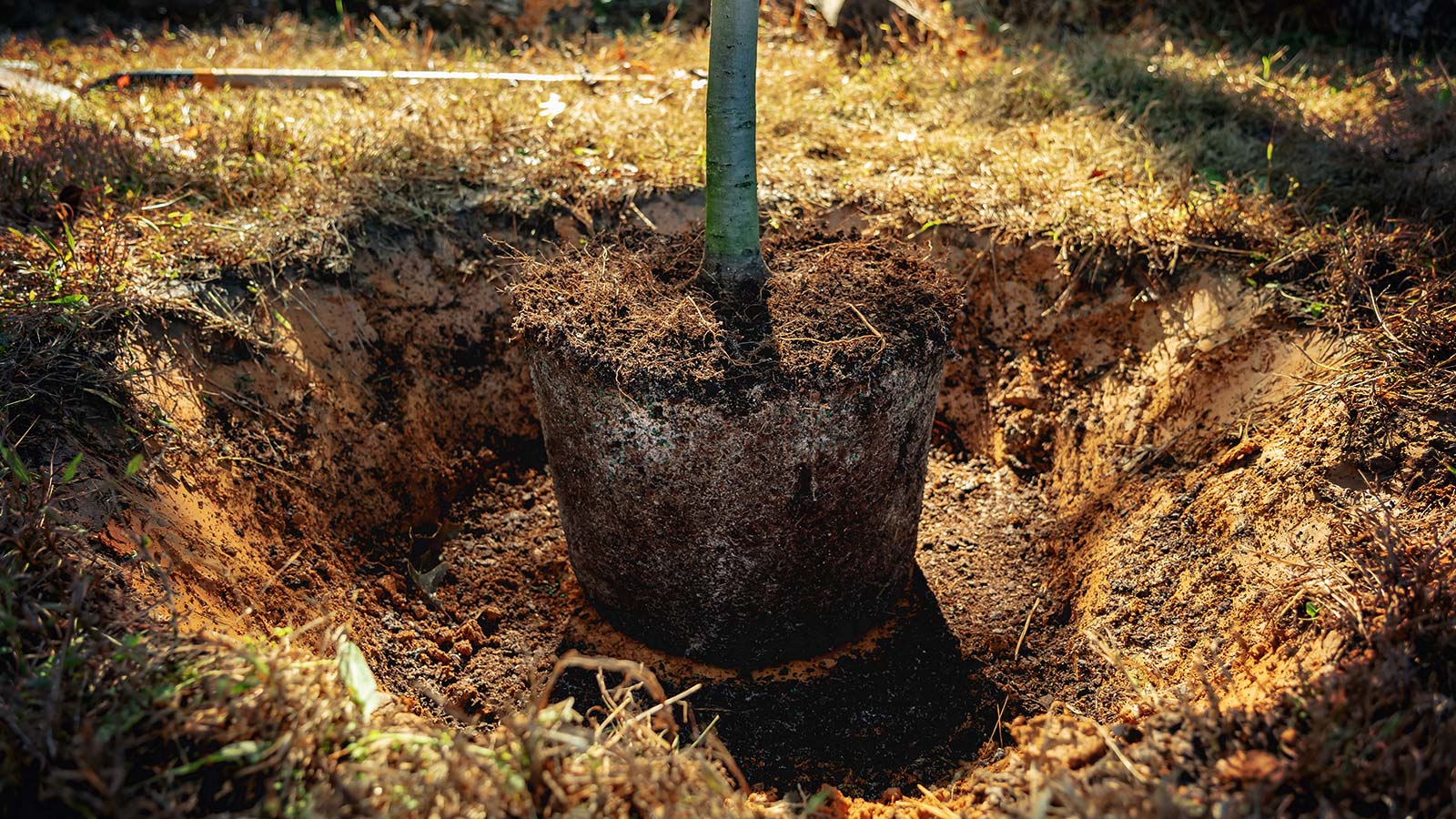
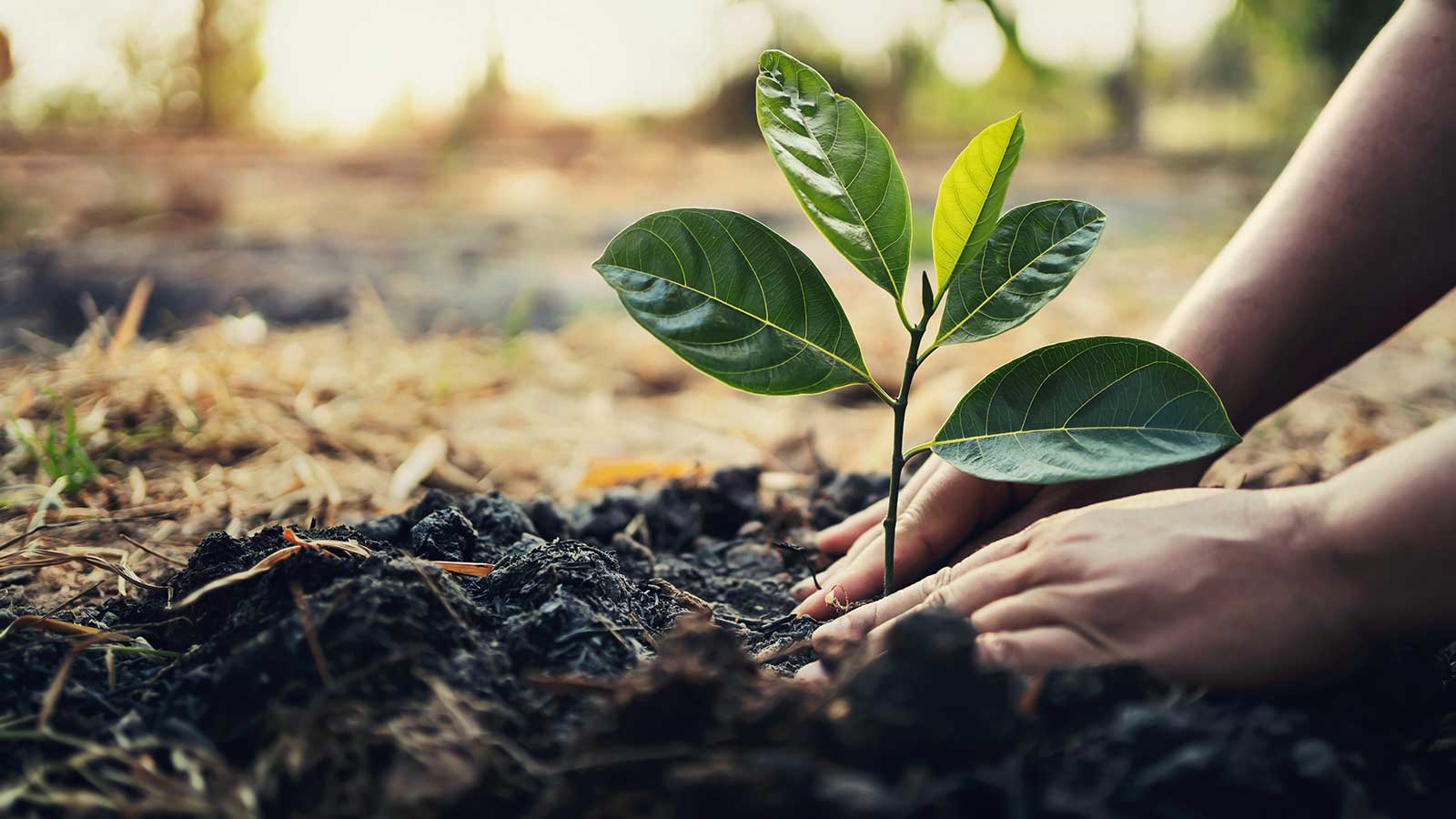
Improper planting is a major reason young trees fail to establish, so how you put it in the ground matters as much as what you choose. You can plant it yourself by following the clearly laid-out steps in this video. Or skip the guesswork. Send us a message for a free quote, and one of our Treecologists will help you pick the tree that fits your home and your vision, then plant it right the first time.